
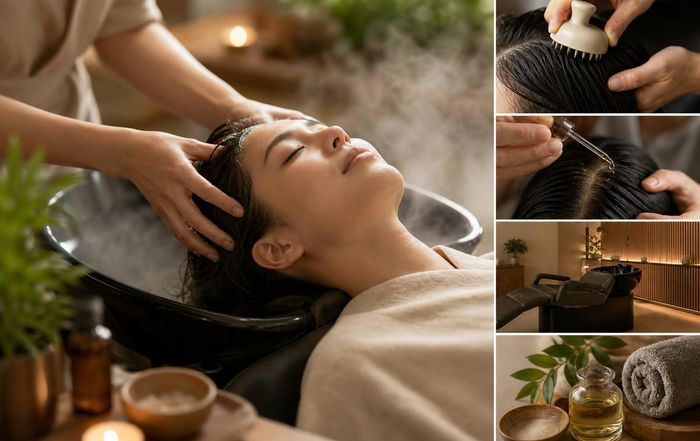
What Is a Scalp Spa and What Really Happens During a Visit?
Scalp spas have moved from niche beauty trend to mainstream wellness service in many major cities, promising everything from thicker hair to deeper relaxation. Yet the term itself can be confusing: is a scalp spa just a glorified shampoo, a medical treatment, or something in between? Understanding what actually happens during a visit helps you decide whether it belongs in your self-care routine alongside massages, facials, or traditional salon appointments.
Sit down as we walk through what a scalp spa is, what typically happens step by step, how it differs from a regular salon wash, what benefits are realistic, and how to choose a reputable provider and prepare for your first visit.
How a Scalp Spa Differs from a Regular Salon Wash
A scalp spa is a focused treatment designed to cleanse, exfoliate, and massage the scalp, often blending cosmetology, relaxation, and elements of trichology (the study of the hair and scalp). While a regular salon wash is mostly a quick cleanse before a haircut or color, a scalp spa visit usually runs 45-90 minutes and is treated as a standalone service.
Most scalp spa menus combine several elements: detailed scalp assessment, targeted cleansing products, manual or device-based exfoliation, extended massage, and sometimes low-level light or ultrasound devices. The goal is not only cosmetic (shinier hair, better styling) but also to support scalp health, which dermatologists increasingly recognize as an extension of skin health. Organizations like the American Academy of Dermatology highlight that conditions such as dandruff, seborrheic dermatitis, and psoriasis begin at the scalp level, and that gentle but thorough care can be an important part of management, alongside medical treatment when needed (https://www.aad.org/).
Where a standard salon wash may take five minutes and use the same shampoo for nearly everyone, a scalp spa treatment is more diagnostic and customized. It also tends to be framed less as a beauty add-on and more as a wellness experience, similar in spirit to a facial or body treatment you might find in a full-service spa or salon.
Step-by-Step: What Typically Happens During a Scalp Spa Visit
Every spa has its own style, but a first visit usually follows a recognizable sequence. Understanding the steps makes it easier to know what to expect and what to ask for.
1. Consultation and Scalp Assessment
Most appointments start with a brief intake conversation. The therapist or scalp specialist will usually ask about your main concerns: itchiness, flaking, excess oil, hair shedding, tightness, or simply stress relief. They may also ask about medical conditions such as psoriasis, eczema, or recent infections; medications; hair coloring or chemical treatments; and your regular hair-care routine.
Many modern scalp spas use a handheld camera or "scalp scope" connected to a screen to show magnified images of the scalp. This can reveal buildup from styling products, excess sebum, clogged follicles, or redness and scaling. While this is not a medical diagnosis, it can help guide product choice and massage intensity. Some high-end spas draw on trichology training or partner with dermatologists for more complex cases. Reputable institutions such as the International Association of Trichologists promote evidence-based scalp assessment standards (https://www.trichology.edu/).
At this stage, you can also clarify whether you want a purely relaxing treatment or something more intensive, and whether you have sensitivities to fragrances, essential oils, or specific ingredients.
2. Pre-Cleansing and Detangling
Before any deep work begins, the practitioner usually detangles the hair gently, often with a wide-tooth comb or soft brush. This helps prevent breakage during washing and makes it easier to access the scalp evenly.
Many scalp spas then apply a pre-cleanser or scalp oil. This step can serve several purposes: loosening product buildup, softening dead skin cells, and beginning to dissolve excess sebum. Some use botanical oils such as jojoba or argan; others rely on lightweight, water-soluble formulations designed not to leave residue. Brands with a strong focus on scalp health, such as Aveda or Davines, often emphasize biodegradable surfactants and plant-based ingredients (https://www.aveda.com/, https://www.davines.com/).
The pre-cleanser is usually massaged in with the fingertips, starting to introduce the relaxation element while preparing the skin for deeper cleansing.
3. Deep Cleansing and Exfoliation
The cleansing phase is where a scalp spa most clearly diverges from a standard shampoo. Instead of a quick lather and rinse, the therapist may use:
A clarifying or scalp-specific shampoo to remove oil and product buildup.
A gentle chemical exfoliant containing low-strength salicylic acid or fruit acids to dissolve dead skin cells.
A fine physical exfoliant (such as micro-beads made from biodegradable materials or ground plant powders) to provide light surface polishing.
Evidence from dermatology literature suggests that controlled exfoliation can help manage dandruff and seborrheic dermatitis by reducing the growth of Malassezia yeast and removing excess scale, provided the skin barrier is not disrupted with harsh scrubbing. Organizations like the British Association of Dermatologists point out that over-washing or using strong detergents can worsen irritation, so better scalp spas emphasize gentle techniques and pH-balanced formulas (https://www.bad.org.uk/).
Some practitioners use soft silicone scalp brushes or devices that vibrate to help distribute products and enhance cleansing. The water temperature is typically kept warm but not hot to avoid drying out the scalp and hair.
4. Extended Scalp Massage and Relaxation
For many visitors, the extended massage is the highlight. Depending on the spa, this may last anywhere from 10 to 30 minutes. Techniques can include circular movements with the fingertips, acupressure points along the head and neck, and rhythmic strokes that move from the hairline toward the crown and down the nape.
Massage is not just about indulgence. Small studies and reviews, including those discussed by the National Center for Complementary and Integrative Health in the United States, suggest that massage can temporarily reduce stress, improve perceived well-being, and may increase local blood flow (https://www.nccih.nih.gov/). While the evidence for hair growth from massage alone is limited and mixed, reduced muscle tension and improved circulation may support a healthier environment for hair follicles.
Some scalp spas extend the massage to include the neck, shoulders, and upper back, blurring the line between hair service and body treatment. This can be particularly appealing for those using scalp care as part of a broader wellness or stress-management routine.
5. Targeted Treatments and Devices
After cleansing and massage, the therapist may apply targeted treatments based on your concerns. These can include:
Hydrating or soothing masks for dry, tight, or sensitive scalps.
Balancing treatments for oily or acne-prone scalps.
Serums containing peptides, botanical extracts, or caffeine, marketed to support hair density.
Some scalp spas also use devices such as low-level light therapy (LLLT) helmets, ultrasound infusion tools, or micro-mist machines. LLLT, in particular, has been studied for androgenetic alopecia (pattern hair loss), with some clinical trials showing modest improvements in hair density when used consistently over months. The U.S. Food and Drug Administration (FDA) has cleared certain LLLT devices for this use, but this does not guarantee dramatic results for every user, and it certainly does not turn a single scalp spa session into a hair-regrowth treatment (https://www.fda.gov/).
A responsible spa will frame these add-ons as supportive measures that may complement medical care rather than replacements for seeing a dermatologist, especially for pronounced hair thinning or scalp disease.
6. Rinsing, Conditioning, and Finishing
Once treatments have been left on for the appropriate time, the scalp and hair are thoroughly rinsed. A lightweight conditioner or mask may be applied to the lengths of the hair, avoiding the roots if oiliness is a concern. Some spas finish with a cool water rinse to help the cuticle lie flatter, improving shine.
Drying and styling vary: some scalp spas offer a full professional blow-dry, while others provide simple rough-drying or recommend air-drying to minimize heat exposure. During this stage, the practitioner may point out visible changes such as reduced flaking or less visible buildup, and they may use the scalp camera again for comparison.
Potential Benefits: What's Realistic and What's Hype?
Marketing around scalp spas often promises dramatic transformations, from thicker hair to "detoxed" follicles. It helps to separate what is well-supported from what is more aspirational.
In the short term, many people notice:
A cleaner, lighter feeling at the roots.
Reduced visible flakes if dandruff is mild.
Softer, shinier hair due to thorough cleansing and conditioning.
A sense of relaxation and reduced head and neck tension.
These immediate effects are consistent with what dermatology and hair-science experts describe when the scalp barrier is respected and buildup is removed. Organizations such as the Cleveland Clinic and Mayo Clinic emphasize that gentle cleansing and avoiding irritants are key to maintaining scalp health (https://my.clevelandclinic.org/, https://www.mayoclinic.org/).
Longer-term claims-such as significantly thicker hair or complete reversal of hair loss-are more complex. Hair density depends on genetics, hormones, nutrition, underlying medical conditions, and age. A clean, balanced scalp environment may support healthier growth where follicles are still active, but it cannot revive follicles that have miniaturized or closed due to pattern baldness or scarring conditions. For persistent hair loss, professional medical evaluation is essential.
That said, consistent scalp care, combined with evidence-based treatments recommended by a dermatologist, can be part of a comprehensive approach. Incorporating scalp spa techniques into home routines-such as gentle weekly exfoliation, careful product selection, and regular massage-can complement medical and cosmetic strategies covered in areas like health and beauty.
Who Might Benefit Most from a Scalp Spa?
A scalp spa visit can be appealing for different reasons depending on lifestyle, hair type, and specific concerns. It may be particularly useful for:
People with heavy product use or pollution exposure, such as those living in large cities or using frequent styling products, may accumulate more residue on the scalp. Deep cleansing and exfoliation can help remove this buildup more effectively than everyday shampooing. Environmental and occupational health organizations, including the World Health Organization (WHO), have highlighted how air pollution can deposit particulate matter on skin and hair, which may contribute to irritation in some individuals (https://www.who.int/).
Individuals with mild dandruff or oiliness (but no severe skin disease) can find that periodic scalp treatments help manage flaking and greasiness, provided products are gentle and not overly fragranced. However, if dandruff is severe, persistent, or accompanied by redness and pain, dermatology-approved medicated shampoos and clinical care remain the priority.
Those experiencing stress-related tension headaches or muscle tightness often appreciate the massage aspect. For people who struggle to relax during traditional body massages, having the focus on the head and neck can feel more comfortable and less exposing, fitting naturally into a broader lifestyle approach to stress management.
Travelers or busy professionals seeking quick rejuvenation may also gravitate to scalp spas, especially in urban centers across Asia and Europe where "head spas" are common in department stores and transit hubs. In countries such as Japan and South Korea, scalp treatments have long been integrated into beauty culture, often blending aromatherapy, ergonomically designed chairs, and even sound therapy.
When a Scalp Spa Might Not Be Appropriate
Despite its gentle image, a scalp spa is not suitable for everyone or every situation. Some conditions call for medical advice before booking an appointment.
People with active scalp infections, open wounds, or severe inflammatory conditions such as untreated psoriasis or eczema may find that exfoliation and massage worsen symptoms. Medical bodies like the American Academy of Dermatology recommend tailored, prescription-based regimens for these conditions, and vigorous manipulation can disrupt already fragile skin (https://www.aad.org/).
Those undergoing chemotherapy or taking medications that thin the skin or affect blood clotting should consult their oncology or dermatology team before trying scalp treatments. Even natural essential oils can be irritating or interact with photosensitivity in some therapies.
If hair loss is sudden, patchy, or associated with other symptoms such as fatigue, weight changes, or hormonal shifts, self-treating with spa services can delay necessary diagnosis. In these cases, an evaluation by a dermatologist or primary-care doctor is more urgent than booking a wellness treatment.
Finally, people with fragrance allergies, asthma triggered by strong scents, or a history of contact dermatitis should be cautious. Fragrance-free or hypoallergenic product lines are not universal, so it is important to ask in advance and read ingredient lists carefully.
How to Choose a Reputable Scalp Spa
Quality and safety vary widely between providers, especially as "scalp spa" is a marketing term rather than a formally regulated category in most countries. A thoughtful selection process can make the experience more beneficial and less risky.
First, check qualifications. In many jurisdictions, practitioners performing scalp treatments must hold cosmetology or hairdressing licenses at minimum, and some may have additional training in trichology or therapeutic massage. Reputable providers often reference recognized institutions, such as national cosmetology boards or established hair-science organizations. While not equivalent to a medical degree, these credentials suggest a baseline understanding of hygiene and scalp anatomy.
Second, review the product philosophy and transparency. Spas that are comfortable providing ingredient lists, explaining pH levels, and discussing how they accommodate sensitive skin demonstrate a more health-conscious approach. Some partner with dermatology-aligned brands or emphasize sulfate-free and color-safe formulations, which can be important if you have chemically treated hair. Environmental or sustainable priorities may also guide your choice, from cruelty-free products to water-saving equipment.
Third, consider hygiene and infection-control practices. Tools such as scalp brushes and towels should be thoroughly cleaned or single-use. Basins must be disinfected between clients. Health organizations, including many national public-health agencies, stress that poor salon hygiene can transmit fungal or bacterial infections, even during seemingly low-risk services.
Finally, pay attention to how staff talk about results. Any spa promising guaranteed hair regrowth or "permanent" solutions without medical involvement should raise red flags. By contrast, providers who acknowledge limits, recommend medical follow-up when needed, and frame treatments as supportive rather than curative are more likely to prioritize your well-being.
Preparing for Your First Appointment
A bit of preparation can make the visit smoother and help the therapist tailor the experience to your needs.
Most scalp spas prefer that clients arrive with relatively clean hair, free from heavy styling products, dry shampoo, or oils that could interfere with assessment. However, you do not usually need to wash your hair immediately before the appointment, as cleansing is part of the service. If you regularly use medicated shampoos, ask whether to continue them right up to the visit; in many cases, you can resume them afterward without issue.
It is helpful to bring a list of any scalp or hair products you use frequently, along with information about any known allergies or sensitivities. If you have been diagnosed with a scalp condition or are on prescription treatments, mentioning this at the start allows the practitioner to avoid conflicting ingredients or overly aggressive techniques.
Wear comfortable clothing that you do not mind getting slightly damp, and consider whether you have commitments right after the appointment that require specific styling. Some people schedule scalp spa visits on days when they can let their hair air-dry afterward to minimize heat exposure.
If you are integrating scalp care into a broader wellness plan that includes fitness, nutrition, or stress-reduction practices like yoga, it can be useful to think about your overall lifestyle patterns. Sleep quality, diet, and hormonal health all influence the scalp, and a good practitioner may discuss how at-home habits interact with in-spa treatments.
Integrating Scalp Spa Care into Everyday Life
One visit can be a relaxing reset, but lasting scalp health usually depends on what happens between appointments. Many of the principles used in professional treatments can be adapted at home.
Gentle, regular cleansing with a shampoo suited to your hair type helps prevent excessive buildup; those with oily scalps may need more frequent washing than those with dry or curly hair. Periodic use of a mild exfoliating product-no more than once a week for most people-can mimic some aspects of spa treatments without over-stripping the skin barrier. Health authorities and dermatology organizations consistently warn against harsh scrubbing or frequent use of strong clarifying shampoos, which can cause rebound oiliness or irritation.
Incorporating brief scalp massage into your routine, perhaps while applying shampoo or a leave-in tonic, can add a small daily relaxation ritual. Combined with broader wellness practices, including movement, balanced nutrition, and stress management, this can support both mental and physical well-being.
For those who enjoy the immersive environment of a professional spa-dim lighting, calming music, aromatherapy-a periodic scalp spa session can act as a deeper reset, much like an occasional facial or body treatment. The key is to view it as one piece of a holistic approach to self-care rather than a stand-alone cure for complex hair or scalp issues.
Making the Most of a Scalp Spa Visit
A scalp spa is best understood as a hybrid between a hair service and a wellness treatment. It offers thorough cleansing, targeted products, and relaxing massage that can leave the scalp feeling refreshed and the mind calmer. The experience can be especially satisfying for people who enjoy spa environments or want to address mild scalp concerns in a soothing, non-clinical setting.
At the same time, expectations matter. While a clean, balanced scalp is an important foundation for healthy hair, a single session will not reverse genetic hair loss or replace medical care for significant scalp disease. The most rewarding experiences usually come from choosing a reputable provider, being clear about your goals, and integrating what you learn into sustainable at-home habits and broader lifestyle choices.
For anyone already exploring areas like beauty, spa and salon treatments, and everyday lifestyle upgrades, a well-chosen scalp spa can be a thoughtful addition-a focused moment of care for a part of the body that is often overlooked, yet central to how we look, feel, and relax.
