
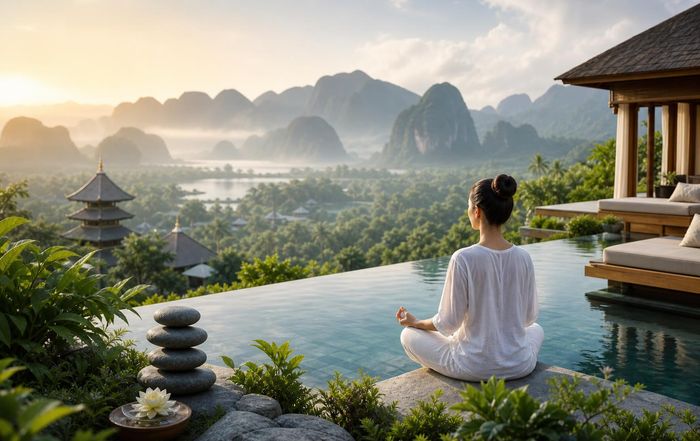
The Growth of Wellness Tourism in Asia: A Strategic Opportunity for Global Travelers and Brands
Wellness Tourism: A New Center of Gravity in Asia!
Wellness tourism has moved from a niche interest to a defining force in global travel, reshaping how individuals plan vacations, how corporations build benefits programs, and how destinations position their brands. Nowhere is this transformation more visible than in Asia, where centuries-old healing traditions intersect with cutting-edge medical science, digital innovation, and rapidly expanding middle-class demand. For QikSpa and its fabulous peace seeking followers across spa and salon, health, wellness, beauty, food and nutrition, fitness, yoga, fashion, business, and lifestyle, Asia's wellness tourism boom represents not only a compelling travel trend but also a strategic blueprint for how holistic wellbeing is being redefined worldwide.
International bodies such as the World Health Organization have long emphasized that health is not merely the absence of disease but a state of complete physical, mental, and social wellbeing, and this broader definition has become the philosophical foundation for the rise of wellness tourism. As travelers in the United States, Europe, and across Asia seek experiences that combine rest with purposeful self-improvement, Asian destinations have responded with integrated offerings that blend spa therapies, traditional medicine, culinary health, fitness, and mindfulness. Readers and sub members can explore how these trends intersect with broader health priorities in the dedicated daily updated health insights section.
From Spa Escapes to Holistic Ecosystems
In the early 2010s, wellness tourism in Asia was largely associated with luxury spa retreats in Thailand or Bali, where travelers from North America and Europe sought massages, yoga, and beachside relaxation. By 2026, the market has evolved into a sophisticated ecosystem that spans urban medical wellness centers, nature-based digital detox retreats, corporate wellbeing programs, and even wellness-oriented co-working and co-living spaces. Research by the Global Wellness Institute has documented how wellness tourism has outpaced overall tourism growth, with Asia-Pacific consistently ranking among the fastest-growing regions, driven by rising disposable incomes, demographic shifts, and a cultural predisposition toward holistic health.
This evolution has significant implications for spa and salon operators, beauty brands, and hospitality companies that collaborate with wellness providers. Many leading groups, including Accor, Marriott International, and Hyatt Hotels Corporation, have expanded their wellness portfolios, partnering with regional spa brands and integrating local healing traditions into standardized global offerings. For readers interested in how spa and salon concepts are adapting to these shifts, the spa and salon coverage on QikSpa offers a closer look at emerging models and consumer expectations.
Cultural Roots: Asian Healing Traditions as Strategic Differentiators
Asia's wellness tourism advantage is grounded in deep cultural roots. Long before the term "wellness tourism" existed, societies across India, China, Japan, Thailand, Korea, and Southeast Asia developed comprehensive systems of healing that integrated body, mind, and spirit. In 2026, these traditions have become powerful differentiators in a crowded global market, especially as travelers seek authenticity and meaning rather than generic spa experiences.
In India, Ayurveda and yoga form the backbone of many wellness retreats, from Kerala's coastal healing centers to Himalayan meditation resorts. Institutions such as the Ministry of AYUSH in India have promoted traditional systems of medicine, while the global popularity of yoga has been reinforced by organizations like Yoga Alliance, which provide international standards and teacher certifications. Travelers exploring yoga-focused experiences can align trip planning with personal practice by consulting resources like Yoga Journal and by exploring complementary content in QikSpa's yoga section, which connects traditional practice with modern wellbeing needs.
Similarly, Traditional Chinese Medicine (TCM), encompassing acupuncture, herbal medicine, and qigong, has become a cornerstone of wellness offerings in China, Singapore, and beyond. The World Health Organization has recognized certain traditional practices within broader health systems, and many medical wellness centers in Asia now offer integrative care that combines Western diagnostics with Eastern therapies. In Japan, onsen culture and the philosophy of "ikigai" have been translated into immersive wellness itineraries, while in Thailand, traditional Thai massage and herbal compress therapies are integrated into structured detox and rehabilitation programs. These culturally rooted modalities provide an authenticity that is difficult to replicate elsewhere, reinforcing Asia's position as a leader in holistic tourism.
Health, Longevity, and Medical Wellness Convergence
One of the most significant developments since 2020 has been the convergence of wellness tourism with medical and longevity-focused travel. Asia has become a hub for preventive health screenings, regenerative medicine, and integrative therapies that appeal to travelers seeking more than relaxation. Leading hospitals and medical centers in South Korea, Singapore, Thailand, and India have established international patient programs, offering comprehensive health check-ups, aesthetic procedures, and chronic disease management packages that are paired with wellness-oriented accommodation and lifestyle coaching.
Organizations such as Mayo Clinic and Cleveland Clinic in the United States have shaped global standards in patient-centered care and preventive medicine, and their influence is increasingly visible in Asian medical wellness centers that adopt similar models of integrated, evidence-based practice. The OECD and World Bank have highlighted how demographic aging in countries like Japan, South Korea, and China is driving demand for longevity solutions, and this macro trend is now deeply embedded in wellness tourism offerings. Travelers often combine a week-long retreat with diagnostic testing, nutritional counseling, and movement therapy, aligning leisure with long-term health goals. Those interested in how nutrition and preventive care intersect can explore QikSpa's food and nutrition coverage, which complements destination-oriented content with practical guidance.
Wellness, Mental Health, and Post-Pandemic Recovery
The COVID-19 pandemic fundamentally altered perceptions of health and travel, with mental wellbeing emerging as a top priority for individuals and organizations. In 2026, Asian wellness destinations are responding with programs that explicitly address stress, burnout, anxiety, and digital overload. Retreats in Thailand, Indonesia, Sri Lanka, and Vietnam now offer structured mental health programs that combine mindfulness, cognitive-behavioral techniques, and nature immersion, often designed in collaboration with licensed psychologists and psychiatrists.
Global institutions such as the American Psychological Association and National Institute of Mental Health have underscored the long-term psychological impacts of chronic stress and social isolation, and many Asian wellness operators have used this research to design evidence-informed interventions. Forest bathing experiences in Japan, meditation retreats in India and Nepal, and mindfulness-based stress reduction programs in urban centers like Singapore and Hong Kong are marketed not as escapist luxuries, but as essential tools for resilience and performance. Business leaders, HR professionals, and entrepreneurs who follow QikSpa's business insights increasingly view wellness travel as part of a broader strategy for talent retention, leadership development, and organizational health.
Fitness, Movement, and the Rise of Active Retreats
While spa and relaxation remain central, the fastest-growing segment of wellness tourism in Asia is active and performance-oriented. From trail running camps in the Japanese Alps to Muay Thai and MMA training in Thailand, surfing and freediving in Indonesia, and cycling tours across Vietnam and South Korea, travelers are seeking experiences that challenge their physical limits while providing structured recovery and coaching. The World Health Organization's physical activity guidelines and the expanding body of research on exercise and longevity, published in journals accessible through platforms like PubMed, have reinforced the message that movement is a non-negotiable pillar of health.
Many Asian resorts now offer integrated fitness and recovery programs that include personalized training, mobility work, sleep optimization, and nutrition planning. Wearable technology from companies such as Garmin, Apple, and WHOOP is widely used to track biometrics during retreats, enabling data-driven personalization. For readers looking to translate travel inspiration into everyday routines, QikSpa's fitness section provides a bridge between destination experiences and sustainable, at-home training approaches that support long-term wellbeing.
Beauty, Aesthetics, and the Wellness-Beauty Convergence
Asia's influence on global beauty and aesthetics has intensified in 2026, as wellness tourism and beauty tourism increasingly overlap. South Korea's K-beauty industry, led by brands such as Amorepacific and LG H&H, has popularized multi-step skincare routines, dermatological innovation, and minimally invasive aesthetic procedures that attract visitors from the United States, Europe, and across Asia. In parallel, Japan's J-beauty philosophy emphasizes simplicity, longevity, and skin integrity, which aligns closely with wellness values.
Medical spas and aesthetic clinics across Seoul, Tokyo, Bangkok, and Singapore offer integrated packages that combine dermatology, cosmetic procedures, nutritional counseling, and stress management, reflecting the growing consensus that skin health is inseparable from systemic health. Publications such as Vogue and Allure have documented this convergence, while dermatology organizations like the American Academy of Dermatology provide evidence-based guidance on safe and effective treatments. Readers seeking to understand how beauty, wellness, and travel intersect can explore QikSpa's beauty coverage, which examines both trends and practical considerations for consumers.
Sustainable and Regenerative Wellness Tourism
As wellness tourism scales across Asia, sustainability has emerged as a critical differentiator and a test of long-term credibility. Travelers are increasingly aware that personal wellbeing cannot be pursued at the expense of environmental degradation or community displacement. Leading resorts and wellness destinations in Thailand, Bhutan, Sri Lanka, and Indonesia are adopting regenerative models that prioritize local employment, cultural preservation, and ecological restoration. Organizations such as the Global Sustainable Tourism Council and United Nations Environment Programme have articulated frameworks for sustainable tourism, and wellness operators are aligning with these standards to build trust with discerning guests.
Examples include the use of locally sourced organic ingredients in spa treatments and cuisine, investment in renewable energy and water conservation, and the integration of community-based tourism that allows guests to engage respectfully with local cultures. Some properties have moved beyond sustainability to regenerative practices, actively restoring degraded ecosystems through reforestation, coral rehabilitation, and wildlife protection. Readers who wish to align their travel choices with their values can explore QikSpa's sustainable travel and lifestyle content, which highlights destinations and brands that prioritize both wellbeing and planetary health.
Women, Leadership, and Inclusive Wellness Experiences
Women are both primary decision-makers and key innovators in the wellness tourism landscape. Across Asia, female entrepreneurs, therapists, doctors, and executives are shaping new models of inclusive, gender-sensitive wellness that address the specific needs of women at different life stages. From fertility and prenatal retreats in India and Singapore to menopause-focused programs in Japan and South Korea, and leadership retreats for women executives in Bali and Thailand, the market is becoming more nuanced and responsive.
Organizations such as UN Women and the World Economic Forum have emphasized the importance of gender equality and women's economic empowerment, and these priorities are increasingly reflected in hiring practices, leadership development, and community engagement within the wellness industry. Many Asian retreats now feature women-led panels, mentorship programs, and workshops on financial wellbeing, career resilience, and work-life integration, recognizing that holistic wellness includes professional and economic security. Readers interested in the intersection of gender, wellness, and leadership can explore QikSpa's women-focused content, which highlights stories and strategies relevant to women in diverse roles and regions.
Global Demand, Regional Nuance: Key Asian Markets
The growth of wellness tourism in Asia is not monolithic; it reflects a mosaic of regional strengths, consumer preferences, and policy frameworks. In Southeast Asia, Thailand and Indonesia remain powerhouses, with Thailand's government actively supporting medical and wellness tourism through agencies such as the Tourism Authority of Thailand, and Indonesia leveraging Bali's global brand as a spiritual and creative hub. In South Asia, India and Sri Lanka combine traditional medicine with meditation and yoga, attracting visitors from Europe, North America, and the Middle East who seek spiritually anchored, transformational experiences.
In East Asia, Japan and South Korea offer highly structured, technology-enhanced wellness and medical experiences that appeal to travelers who prioritize precision, safety, and innovation. Singapore, with its robust healthcare system and reputation for efficiency, has positioned itself as a gateway for high-net-worth wellness and medical travelers in Asia. China, despite regulatory and geopolitical complexities, continues to invest in domestic wellness infrastructure, with TCM-based resorts and wellness-focused real estate developments serving a large internal market. For travelers and professionals planning cross-border experiences or partnerships, QikSpa's international coverage provides context on how regional dynamics shape opportunities and risk.
Wellness, Lifestyle, and the Future of Work
Beyond individual retreats, wellness tourism in Asia is influencing broader lifestyle choices and career trajectories. The rise of remote and hybrid work models has enabled professionals to spend extended periods in wellness-oriented destinations, blending work, learning, and self-care. Digital nomad visas in countries like Thailand and Indonesia, combined with wellness-focused co-living spaces, have created new ecosystems where entrepreneurs, creatives, and knowledge workers can live and work in environments designed for physical and mental health.
Reports from organizations such as McKinsey & Company and Deloitte have highlighted how employee wellbeing is now a strategic priority for companies seeking to attract and retain talent, and corporate wellness offsites in Asian destinations are becoming more sophisticated, integrating leadership development, resilience training, and diversity and inclusion workshops. For professionals considering careers in wellness tourism or adjacent sectors, QikSpa's careers section explores emerging roles, required skills, and pathways into this rapidly expanding industry, while the lifestyle insights section examines how wellness travel influences everyday habits and long-term life design.
Strategic Considerations for Travelers and Businesses
For travelers, the growth of wellness tourism in Asia offers unprecedented choice, but it also demands discernment. Evaluating the quality and safety of services, the credentials of practitioners, and the ethical practices of operators is essential. Resources such as the U.S. Centers for Disease Control and Prevention and national health ministries provide guidance on travel health, vaccinations, and medical standards, while professional associations in fields such as nutrition, psychology, and physiotherapy publish best-practice guidelines. Integrating this information with destination-specific research and peer reviews allows travelers to make informed decisions that align with their health status, goals, and values.
For businesses, from spa and salon operators to hospitality groups, beauty brands, fitness companies, and investors, Asia's wellness tourism boom presents both opportunity and complexity. Success requires an understanding of local regulations, cultural expectations, and competitive landscapes, as well as a commitment to authenticity and ethical conduct. Partnerships with credible medical institutions, adherence to international accreditation standards, and transparent communication about services and outcomes are critical to building trust. Brands that align their strategies with long-term wellbeing, environmental responsibility, and social impact are more likely to earn the loyalty of increasingly sophisticated wellness travelers. Those exploring strategic opportunities can find complementary perspectives in QikSpa's business insights, which connect market trends with operational and leadership considerations.
Asia's Wellness Tourism Trajectory and QikSpa's Role
Asia stands at the forefront of a global reimagining of travel, where the primary metric of a successful trip is not how much was seen or consumed, but how deeply one's health, mindset, and relationships were transformed. From spa and salon experiences that integrate local traditions and advanced techniques, to holistic health and medical wellness programs, from active fitness and yoga retreats to beauty, nutrition, and sustainable lifestyle journeys, the region offers a spectrum of possibilities that speak to the evolving priorities of travelers across the world.
For QikSpa, this transformation is not an abstract trend but a lived reality reflected in the interests and aspirations of its audience in the United States, Europe, Asia, and beyond. By curating unaffiliated and impartial recent insights across wellness, health, travel, beauty, fitness, and related domains, QikSpa serves as a trusted guide for individuals and organizations navigating this new landscape. The platform's focus on experience, expertise, authoritativeness, and trustworthiness is aligned with the needs of a global audience that seeks not only inspiration, but also reliable, actionable knowledge.
As wellness tourism in Asia continues to grow, driven by demographic shifts, technological innovation, cultural heritage, and a heightened awareness of health and sustainability, the most successful destinations and brands will be those that view wellness not as a marketing label, but as a holistic commitment to human and planetary flourishing. Travelers, professionals, and businesses who engage with this ecosystem thoughtfully will find that Asia offers not just places to visit, but pathways to more resilient, purposeful, and connected lives. For those ready to explore these pathways, QikSpa remains a dedicated original news and peaceful wellness seeking partner in understanding, experiencing, and shaping the future.
