
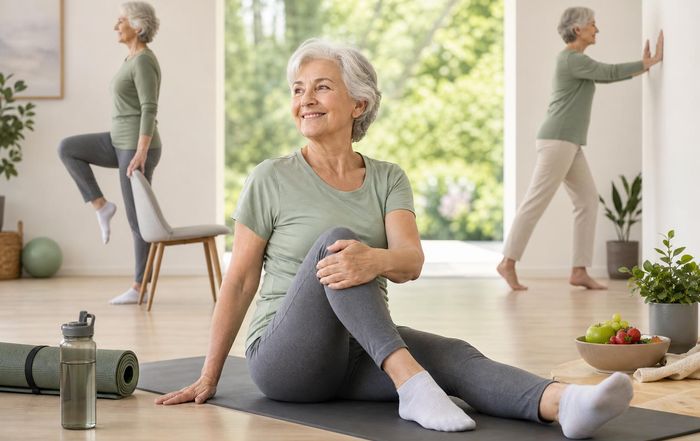
Simple Mobility Exercises to Support Healthy Aging
Staying mobile with age is less about chasing athletic goals and more about preserving everyday freedom: getting out of a chair without help, climbing stairs confidently, turning your head while driving, or reaching the top shelf without strain. Research from organizations such as the World Health Organization and U.S. National Institute on Aging consistently shows that regular, moderate movement can reduce the risk of falls, maintain independence, and support mental well-being into later life. Mobility exercises-gentle movements that keep joints flexible and muscles responsive-sit at the heart of this approach and can be done at home in just a few minutes a day, often without any equipment.
This guide focuses on simple, low-impact mobility exercises that support healthy aging for adults at many fitness levels. It is not a replacement for medical advice, especially for those with chronic conditions, recent surgery, or significant pain. However, it offers a practical starting point for building a daily or weekly routine that keeps the body moving comfortably and safely, and it connects mobility work to broader self-care, relaxation, and lifestyle choices.
Why Mobility Matters More as We Age
Mobility is the ability to move freely and easily through daily life. It blends joint flexibility, muscle strength, balance, and coordination. With age, natural changes in muscle mass (sarcopenia), joint cartilage, and connective tissues, combined with more sedentary habits, often reduce this freedom of movement. According to the World Health Organization (who.int), physical inactivity is a major risk factor for noncommunicable diseases and can accelerate functional decline. Simple mobility exercises help counter this by keeping joints nourished through movement, maintaining range of motion, and stimulating the nervous system to coordinate muscles effectively. For many older adults, the goal is not to become "fit" in the athletic sense, but to maintain or regain the ability to walk comfortably, get in and out of bed, or enjoy leisure activities without fear of injury.
Mobility work also plays a significant role in fall prevention. The Centers for Disease Control and Prevention (cdc.gov) notes that falls are a leading cause of injury among older adults, and reduced ankle, hip, and trunk mobility is a contributing factor. Exercises that gently challenge balance, improve ankle flexion, and allow the torso to rotate can make it easier to recover from a stumble or navigate uneven surfaces. Beyond physical safety, mobility supports social and emotional health: being able to leave the house, travel, or participate in hobbies can protect against isolation and low mood, themes that often intersect with broader wellness and lifestyle choices.
From a spa and self-care perspective, mobility routines can be integrated into daily rituals-after a warm shower, before a massage, or as part of a home relaxation session-to release muscular tension and complement treatments that focus on circulation and recovery. Gentle movement increases blood flow, which can enhance the effects of massage, hydrotherapy, and other spa and salon services. When combined with breathing awareness, mobility work also becomes a meditative practice, aligning well with yoga, restorative stretching, and other mind-body approaches popular in many wellness cultures worldwide.
Getting Started Safely: General Guidelines
Before beginning any new movement routine, it is sensible for older adults or those with medical conditions to consult a healthcare professional. Organizations such as the National Institute on Aging (nia.nih.gov) and NHS in the UK (nhs.uk) emphasize that even small amounts of safe movement are beneficial, and programs can be adapted to almost any ability level. A doctor, physiotherapist, or qualified exercise professional can help identify limitations related to arthritis, osteoporosis, heart conditions, or balance issues and suggest modifications like using a chair, wall support, or assistive devices. This upfront guidance reduces the risk of overexertion and helps individuals feel more confident as they start.
Warm-up is particularly important with aging tissues, which may take longer to respond to movement. A few minutes of gentle walking around the home, marching in place, or slowly circling the arms and ankles can prepare muscles and joints. Movements should be pain-free or only mildly uncomfortable; sharp, catching, or worsening pain is a signal to stop and reassess. The American College of Sports Medicine (acsm.org) and Mayo Clinic (mayoclinic.org) both recommend starting with low intensity and gradually increasing duration or range of motion rather than forcing flexibility.
Breathing is another often-overlooked element. Holding the breath can raise blood pressure and increase tension, particularly during balance or strength tasks. Instead, steady nasal or relaxed mouth breathing helps calm the nervous system and improves oxygen delivery to working tissues. Integrating breathing awareness draws on principles similar to those used in yoga and meditation, helping mobility sessions feel more like restorative self-care than "exercise," which can be especially appealing to those who do not identify as fitness-focused.
Gentle Daily Mobility Routine (Head to Toe)
The following head-to-toe sequence can be performed once or twice a day, with most movements done for 5-10 slow repetitions or 20-30 seconds each. A stable chair, countertop, or wall can provide support as needed. This sequence is designed as a template rather than a strict prescription; individuals can add or remove exercises depending on comfort and medical advice.
Neck and Upper Back: Releasing Desk and Screen Tension
Many adults, regardless of age, spend long hours looking down at phones or sitting at computers, leading to stiff necks and rounded shoulders. Over time, this posture can contribute to headaches, reduced ability to turn the head while driving, and discomfort during everyday activities. Simple neck mobility exercises focus on gentle range of motion without forcing the end range. Seated or standing tall, one can slowly turn the head to look over the right shoulder, pause briefly, return to center, then repeat to the left. The movement should be smooth and controlled, avoiding any bouncing. Next, tilting the ear toward the shoulder on each side helps lengthen the side of the neck; again, the goal is a mild stretch, not strain.
Upper back mobility is equally important. Many physiotherapists recommend seated "thoracic rotations": sitting upright with arms crossed over the chest, gently rotate the torso to one side, pause, then rotate to the other. This improves the ability to twist for tasks like reaching a seatbelt or looking behind when walking. Gentle "cat-cow" movements-arching and rounding the spine while seated or on hands and knees-can also increase spinal flexibility and awareness. For those who enjoy structured practices, these patterns are frequently incorporated into beginner yoga classes and can be explored further through reputable organizations such as Yoga Alliance (yogaalliance.org), while always choosing age-appropriate and accessible sessions.
Shoulders and Arms: Keeping Reach and Independence
Shoulder mobility affects nearly every upper-body task, from washing hair to putting on a jacket. With age, tendons and joint capsules can stiffen, and conditions like rotator cuff irritation or "frozen shoulder" become more common. Simple pendulum swings-leaning forward with one hand supported on a table and the other arm hanging loosely, then gently swinging that arm forward and back, side to side, and in small circles-can lubricate the joint without heavy loading. This exercise is often recommended in early shoulder rehabilitation because it uses gravity rather than muscular force to encourage movement.
Wall slides are another accessible option. Standing with the back against a wall, elbows bent and hands near shoulder height, one can gently slide the arms upward as far as comfortable, then return to the starting position. The wall provides feedback on posture and helps prevent excessive arching of the lower back. Over time, this can improve the ability to reach overhead safely. Light resistance bands, under guidance from a professional or using educational resources from organizations like Physiopedia (physio-pedia.com), can add strength-building to these mobility patterns, further supporting joint health. For those whose interests extend into fitness and health, combining mobility with light resistance can be a practical way to maintain muscle mass.
Hips and Pelvis: The Foundation of Walking Comfort
Healthy hip mobility is central to walking, climbing stairs, getting in and out of cars, and many daily transitions. Sitting for long periods tends to tighten the hip flexors at the front of the hips and weaken the gluteal muscles at the back. Over time, this can change gait patterns and increase strain on the lower back and knees. Simple seated marches-sitting tall on a chair and lifting one knee at a time toward the chest-help maintain hip flexion. For those who can stand safely, supported hip circles (holding a countertop while gently circling one leg like drawing a small circle with the knee) can keep the joint moving in multiple directions.
Gentle standing hip extension, such as holding onto a stable surface and slowly swinging one leg backward without arching the lower back, encourages the gluteal muscles to engage, which supports both mobility and strength. For individuals with arthritis, guidance from organizations like Versus Arthritis in the UK (versusarthritis.org) or the Arthritis Foundation in the US (arthritis.org) can be helpful, as they provide joint-friendly exercise suggestions. These resources emphasize that movement, when performed thoughtfully, can actually reduce stiffness and pain in many types of arthritis rather than worsen it.
Knees and Ankles: Protecting Joints and Preventing Falls
Knee and ankle mobility directly influence stability, stride length, and the ability to navigate slopes or uneven surfaces. Simple seated knee extensions-sitting in a chair and slowly straightening one leg, holding briefly, then lowering-help maintain knee range of motion and gently strengthen the quadriceps. This can make it easier to stand up from chairs or climb stairs. For individuals with knee osteoarthritis, low-load, high-repetition movements are often recommended by groups such as the American Academy of Orthopaedic Surgeons (aaos.org) to support joint nutrition and reduce stiffness, although pain levels should always guide the range of motion.
Ankle mobility is crucial for balance. Limited ability to flex the ankle (dorsiflexion) can cause shorter, shuffling steps and difficulty recovering from a trip. Simple ankle circles-either seated or lying down-where the toes trace circles in both directions can maintain joint freedom. Another option is a gentle "ankle pump": pointing the toes away and then pulling them back toward the body repeatedly. For those who can stand safely, rocking from heels to toes while holding a countertop challenges both ankle mobility and balance. These lower-leg movements can be integrated into broader fall-prevention strategies, complementing balance training and environmental adjustments often recommended in wellness and lifestyle programs aimed at older adults.
Balance and Coordination: Simple Drills to Stay Steady
Balance is a skill that can be trained, and it typically declines without regular challenge. The World Health Organization and many national health agencies advise older adults to include balance and strength activities on at least two days per week. Simple drills can be surprisingly effective. Standing near a counter or sturdy chair, one can practice standing on one leg for 10-20 seconds while lightly touching the support surface. Over time, as confidence grows, the support can be reduced or eyes can be closed briefly to increase difficulty, though safety must always come first and someone should be nearby if balance is significantly impaired.
Another accessible option is tandem stance: standing with one foot directly in front of the other, heel to toe, as if on a tightrope, while holding a support if needed. This challenges the body's ability to control sway side-to-side and front-to-back. Slow, deliberate heel-to-toe walking across a room, sometimes called "tightrope walking," integrates mobility, coordination, and concentration. These drills pair well with mindful breathing and can be incorporated into daily routines, for example during television ad breaks or while waiting for a kettle to boil. They also complement more structured practices like tai chi, which has been shown in multiple studies summarized by institutions such as Harvard Medical School (health.harvard.edu) to improve balance and reduce fall risk in older adults.
Integrating Mobility into a Relaxing Daily Ritual
Mobility exercises are more likely to become a lasting habit when they feel pleasant and integrated into existing routines rather than added as a chore. Linking them with self-care practices familiar from spa culture can make them more enjoyable. After a warm shower or bath, when muscles are relaxed and circulation is increased, a short mobility sequence can feel like an extension of the pampering experience. Gentle aromatherapy, soft lighting, and calm music can further shift the mood from "rehab" to "ritual," aligning with the broader ethos of spa and salon environments that focus on comfort and restoration.
For those interested in beauty and women's wellness, combining facial or hand care with small joint movements can also be effective. For example, while applying moisturizer to the face and neck, one can include gentle neck rotations and shoulder rolls. During a hand or foot massage at home, adding finger, wrist, and toe circles helps maintain fine motor mobility, important for tasks like buttoning clothing or cooking. These micro-sessions accumulate over the day and reduce the need for a single long workout, which may feel intimidating for beginners or those with limited energy.
Hydration and nutrition also influence how the body responds to mobility work. Adequate water intake supports joint lubrication, while a balanced diet rich in anti-inflammatory foods, such as fruits, vegetables, whole grains, and healthy fats, can support tissue repair and general food and nutrition goals. Guidance from reputable sources like the Academy of Nutrition and Dietetics (eatright.org) or national dietary guidelines can help align mobility efforts with broader health strategies. When movement, relaxation, and nourishing habits are combined, the cumulative effect on aging well can be substantial.
When to Modify, Rest, or Seek Professional Help
Listening to the body is essential at any age, but especially in later life or when living with chronic conditions. Mild muscle fatigue or a gentle stretching sensation is normal during mobility work, especially when starting out. However, sharp, stabbing, or worsening pain, joint swelling, dizziness, chest discomfort, or unusual shortness of breath warrant stopping exercise and, if symptoms persist, seeking medical advice. Organizations such as the American Heart Association (heart.org) and National Health Service provide clear guidance on warning signs that should not be ignored during physical activity.
Modifications are not signs of weakness but smart adaptations. Using a chair for support during standing exercises, reducing the range of motion, or performing fewer repetitions can all make a routine more accessible. A physiotherapist, occupational therapist, or qualified exercise specialist with experience in older populations-often found through hospital systems, community centers, or professional bodies like CSP in the UK (csp.org.uk)-can tailor programs to individual needs. They may also integrate assistive tools such as foam rollers, massage balls, or elastic bands to enhance comfort and effectiveness, bridging the gap between clinical rehabilitation and spa-style self-care.
Rest days and variety are equally important. While gentle mobility can often be performed daily, more demanding strength or endurance sessions may require recovery time. Alternating between mobility, light walking, and restorative practices like gentle yoga or breathing exercises can prevent overuse and maintain motivation. For those balancing work, caregiving, and personal health, weaving short "movement snacks" into the day may be more sustainable than long, structured sessions. This flexible approach aligns with other top lifestyle and wellness strategies that emphasize consistency and enjoyment over intensity.
Building a Sustainable Mobility Habit for Healthy Aging
Healthy aging is not defined by the absence of aches or limitations, but by the ability to adapt, maintain independence, and find pleasure in daily movement. Simple mobility exercises-neck turns, shoulder circles, hip swings, knee extensions, ankle pumps, and basic balance drills-require little space or equipment yet can profoundly influence quality of life over time. International guidelines from bodies such as the World Health Organization, National Institute on Aging, and American College of Sports Medicine consistently highlight that it is never too late to start moving more, and that even modest routines can yield meaningful benefits in function, mood, and overall health.
For many older adults, framing mobility as a form of self-care rather than a medical obligation helps it fit naturally alongside other wellness practices, from occasional spa treatments to daily skincare or mindful breathing. Small, regular sessions-perhaps five to ten minutes in the morning and evening-are often more sustainable than ambitious but sporadic workouts. Tracking simple markers, such as how easily one can rise from a chair, how far one can walk comfortably, or how steady one feels while standing on one leg, can provide motivation and a sense of progress. Over time, these modest habits can support not only physical capacity but also confidence, autonomy, and the freedom to keep enjoying travel, social activities, and everyday pleasures well into later life.
