
Crafting a Personal Wellness Routine for Modern Life
The New Definition of Wellness
Today personal wellness is no longer a peripheral concern or a luxury reserved for a select few; it has become a central pillar of how individuals and organizations define a successful life and sustainable performance. Across major markets from the United States and United Kingdom to Germany, Canada, Australia, Singapore, and the wider regions of Europe and Asia, wellness is now understood as an integrated ecosystem that touches physical health, mental resilience, emotional balance, social connection, financial stability, and a sense of purpose. For the audience of QikSpa, this evolution is especially relevant because the platform sits at the intersection of spa and salon culture, lifestyle design, beauty innovation, food and nutrition, business performance, and global wellness trends, translating a complex landscape into actionable routines that can be adapted to different cultures and lifestyles.
The modern definition of wellness has been shaped by several converging forces: rapid digitalization, hybrid work models, accelerated urbanization, global health crises, demographic shifts, and a rising awareness of mental health, as documented by organizations such as the World Health Organization and global consultancies tracking health and productivity trends. As more people work remotely or in hybrid settings, the boundaries between professional and personal life have blurred, creating both unprecedented flexibility and new forms of stress. Learn more about how changing work patterns affect mental health through resources offered by the World Health Organization. In this context, a personal wellness routine is not a rigid schedule of self-care activities but a dynamic, evidence-informed framework that individuals can adapt to their unique circumstances, goals, and responsibilities.
For QikSpa, which curates content across wellness, health, fitness, and lifestyle, the challenge and opportunity lie in helping readers move beyond fragmented tips toward an integrated practice that is both aspirational and realistic. Modern wellness must work for a young professional in London navigating long hours in finance, a working parent in Toronto balancing childcare and a demanding role in tech, an entrepreneur in Singapore scaling a sustainable fashion business, or a digital nomad moving between Berlin, Bali, and São Paulo. The principles may be universal, but the application must be personal, culturally aware, and grounded in reliable, science-based information.
Foundations of an Effective Personal Wellness Routine
Any effective personal wellness routine starts with clarity: clarity about current health status, clarity about priorities, and clarity about constraints. Leading health organizations such as the U.S. Centers for Disease Control and Prevention emphasize that prevention and early awareness are essential to long-term wellbeing, encouraging individuals to understand their risk factors, sleep patterns, nutrition habits, and physical activity levels. A useful starting point is to review credible health guidance from sources like the CDC's healthy living resources, then reflect on how these benchmarks compare with daily reality.
A comprehensive routine typically integrates several interdependent pillars. Physical health includes sleep quality, cardiovascular fitness, strength, mobility, and nutrition. Mental and emotional health encompasses stress management, mood regulation, cognitive focus, and a sense of psychological safety. Social wellness reflects the quality of relationships, community engagement, and support networks. Financial wellness relates to managing income, savings, and spending in ways that reduce chronic stress. Finally, purpose and personal growth involve having a sense of direction, values, and ongoing learning. On QikSpa, these dimensions are naturally woven through categories such as food and nutrition, beauty, travel, and careers, demonstrating that wellness is not confined to the gym or the spa, but extends into how people eat, work, dress, connect, and explore the world.
Designing a routine therefore begins with an honest assessment of where the gaps are. It may be that sleep is consistently sacrificed for late-night work, leading to impaired decision-making and mood volatility, as highlighted by research from institutions like Harvard Medical School, which explains how chronic sleep deprivation undermines immune function, memory, and metabolic health. Learn more about the science of sleep and performance through Harvard's sleep resources. It may be that nutrition is driven by convenience and ultra-processed foods, or that physical activity is sporadic and unstructured. By mapping the current state against a holistic model of health, individuals can identify the few high-impact changes that will make the greatest difference, rather than attempting to overhaul every aspect of life at once.
Integrating Spa and Salon Rituals into Daily Wellbeing
Spa and salon rituals have traditionally been positioned as occasional indulgences, yet in 2026 they are increasingly recognized as strategic components of a sustainable wellness routine, particularly in urban centers across North America, Europe, and Asia-Pacific. The global spa and wellness industry, analyzed by bodies such as the Global Wellness Institute, has evolved beyond beauty treatments to encompass stress relief, sleep support, recovery therapies, and holistic prevention. Learn more about the evolution of the wellness economy through the Global Wellness Institute.
For QikSpa and its audience, the key is translating the restorative qualities of spa experiences into consistent, accessible rituals that can be practiced at home or integrated into regular visits to trusted providers. A thoughtfully designed skincare regimen, for instance, is not only a matter of aesthetics but also an act of self-respect and stress reduction, especially when guided by dermatological science and aligned with evidence-based recommendations from organizations such as the American Academy of Dermatology. Readers can explore the fundamentals of skin health and preventive care through the AAD's educational resources. On the QikSpa spa and salon section, these insights can be contextualized with trends in facial treatments, massage modalities, and hair and nail care that support both appearance and confidence.
Massage therapies, hydrotherapy, aromatherapy, and body treatments can also be reframed as tools for nervous system regulation, supporting recovery from chronic stress and digital overload. When combined with mindfulness practices and breathwork, they contribute to activating the parasympathetic nervous system, which is associated with rest, digestion, and repair. For busy professionals in cities like New York, London, Tokyo, or Singapore, scheduling a recurring massage or restorative treatment becomes a form of preventative maintenance rather than an emergency intervention. At home, simple adaptations such as warm baths, self-massage techniques, and structured evening wind-down rituals extend the spa experience into daily life, transforming personal space into a micro-sanctuary that signals the brain to shift from productivity to restoration.
Lifestyle Design: Structuring the Day for Sustainable Energy
Lifestyle design, a theme central to QikSpa's lifestyle content, involves deliberately shaping daily routines, environments, and habits to support consistent energy and focus rather than relying on willpower or sporadic motivation. In 2026, with hybrid work arrangements now normalized in markets such as the United States, United Kingdom, Germany, Canada, and Australia, individuals have more control over their schedules but also face more temptations to blur boundaries. Thoughtful lifestyle design acknowledges that energy is cyclical and finite, not linear and unlimited.
Emerging research in chronobiology and behavioral science from respected institutions like Stanford University and University College London highlights that aligning demanding cognitive tasks with natural peaks in alertness, and scheduling recovery activities during natural dips, can significantly improve both performance and wellbeing. Readers can explore how circadian rhythms influence productivity and health by reviewing materials from Stanford Medicine's sleep and circadian research. For a professional in Frankfurt or Amsterdam, this might mean protecting early-morning hours for deep work, taking short movement breaks throughout the day, and reserving late afternoon for administrative tasks and communication.
Lifestyle design also includes managing digital exposure. Constant connectivity, notifications, and social media can fragment attention and elevate stress hormones. Establishing defined tech-free windows, particularly in the first and last hour of the day, helps recalibrate the nervous system and reinforces the boundary between personal life and work. This is especially relevant for audiences in Asia, where long working hours and high digital adoption rates in cities like Seoul, Tokyo, and Singapore make digital hygiene a critical aspect of wellness. By aligning daily structure with personal priorities-such as exercise, family time, learning, and creative pursuits-individuals create a routine that feels purposeful and energizing rather than reactive and draining.
Beauty, Confidence, and Emotional Wellbeing
Beauty, often dismissed as superficial, plays a deeper psychological role in self-perception, confidence, and social interaction. In 2026, the global beauty industry is undergoing a profound transformation, moving toward inclusivity, sustainability, and science-backed formulations. For QikSpa, whose beauty coverage spans skincare, haircare, and aesthetics, the emphasis is on helping readers understand how beauty rituals can reinforce emotional wellbeing when approached with intention rather than perfectionism.
Psychological research, including work disseminated by organizations like the American Psychological Association, indicates that grooming and appearance-related routines can influence mood, self-esteem, and even perceived competence in professional environments. Learn more about the links between self-care, appearance, and mental health through the APA's public resources. For women and men in leadership roles across New York, London, Paris, Milan, and Singapore, investing in a consistent, personalized grooming and skincare regimen can serve as a daily anchor that signals readiness and self-respect. This is not about conforming to narrow beauty standards but about aligning external presentation with internal identity and values.
The convergence of dermatology, cosmetic science, and wellness has also given rise to "skin health" as a long-term objective rather than short-term aesthetic fixes. Consumers are increasingly seeking evidence-based guidance, consulting dermatologists, and using tools such as non-invasive skin analyses to tailor their routines. At the same time, beauty is becoming more holistic, integrating nutrition, sleep, stress management, and hormonal balance. For instance, understanding how diet and gut health affect skin conditions is now mainstream knowledge, supported by research from institutions like King's College London and Mayo Clinic, which provide accessible overviews of the gut-skin axis and inflammatory responses. Readers can explore how nutrition and inflammation affect skin through Mayo Clinic's educational content. This holistic lens allows beauty routines to become part of a broader wellness strategy rather than an isolated pursuit.
Food, Nutrition, and the Science of Daily Fuel
Nutrition is one of the most powerful levers for personal wellness, and in 2026 the science is clearer than ever: consistent, balanced dietary patterns matter far more than extreme short-term interventions. Global health authorities such as the World Health Organization, National Health Service in the UK, and Health Canada emphasize whole foods, plant-forward diets, and reduced intake of added sugars, refined grains, and ultra-processed products as foundational to long-term health. Learn more about evidence-based dietary guidance from the NHS healthy eating resources.
For the QikSpa community, the food and nutrition dimension of wellness is not about prescriptive diets but about empowering readers across continents-from North America and Europe to Asia, Africa, and South America-to make informed choices that fit their cultural contexts and personal preferences. Mediterranean-style eating patterns, for example, have been extensively studied by institutions such as Harvard T.H. Chan School of Public Health, which outlines their benefits for cardiovascular health, cognitive function, and longevity. Readers can explore these benefits in more detail through Harvard's nutrition source. In Italy, Spain, Greece, and France, these principles are already embedded in culinary traditions, while in markets like the United States, Canada, and Australia, they are increasingly adopted as a model for sustainable, enjoyable eating.
Equally important is the relationship between nutrition and energy management throughout the day. Stable blood sugar, adequate protein intake, hydration, and micronutrient sufficiency all influence concentration, mood, and physical performance. For professionals in demanding roles, small shifts-such as prioritizing a protein-rich breakfast, choosing whole grains over refined carbohydrates, and reducing sugary beverages-can yield outsized benefits in productivity and resilience. Global organizations like the Food and Agriculture Organization of the United Nations also emphasize the importance of sustainable food systems and responsible consumption, which aligns with QikSpa's interest in sustainable living and ethical choices. Learn more about sustainable food systems and nutrition security from the FAO's knowledge hub. When individuals see their food choices as both a personal health decision and a contribution to planetary wellbeing, their nutrition routines acquire deeper meaning and consistency.
Movement, Fitness, and Functional Strength for Modern Lives
Physical activity remains a cornerstone of wellness, yet in 2026 the conversation has shifted from aesthetic outcomes to functional capacity, longevity, and mental resilience. Leading bodies such as the World Health Organization and American College of Sports Medicine recommend a combination of aerobic activity, strength training, and mobility work as the most effective approach for long-term health. Learn more about global physical activity guidelines through the WHO's recommendations. For QikSpa readers, the fitness category offers a bridge between these guidelines and real-world routines that can be adapted to different lifestyles, from high-intensity urban schedules in New York or Hong Kong to more nature-integrated lives in New Zealand, Norway, or Canada.
The modern approach to fitness recognizes that consistency is more important than intensity, and that exercise must be integrated into the fabric of daily life to be sustainable. For a consultant frequently traveling between London, Zurich, and Dubai, this might mean relying on short, high-quality hotel room workouts, walking meetings, and structured mobility sessions to counteract the effects of long flights and sedentary work. For a remote worker in Stockholm or Melbourne, it may involve cycling commutes, lunchtime strength sessions, and evening walks to decompress. Research from institutions like Johns Hopkins Medicine underscores the profound impact of regular exercise on mood, anxiety, and cognitive function, reinforcing that movement is as much a mental health intervention as a physical one. Readers can review the mental health benefits of exercise through Johns Hopkins' exercise and brain health overview.
Importantly, modern fitness also embraces inclusivity and adaptability. Women in midlife, for example, are increasingly seeking training approaches that respect hormonal shifts, bone density concerns, and recovery needs, reflecting growing awareness supported by organizations such as The North American Menopause Society. At the same time, younger professionals in cities from Berlin to Bangkok are blending traditional gym workouts with outdoor activities, group classes, and digital platforms. The core principle remains the same: a personal wellness routine must incorporate regular, enjoyable movement that builds strength, supports joint health, and enhances cardiovascular capacity, while fitting seamlessly into the realities of modern work and family life.
Yoga, Mindfulness, and Mental Resilience
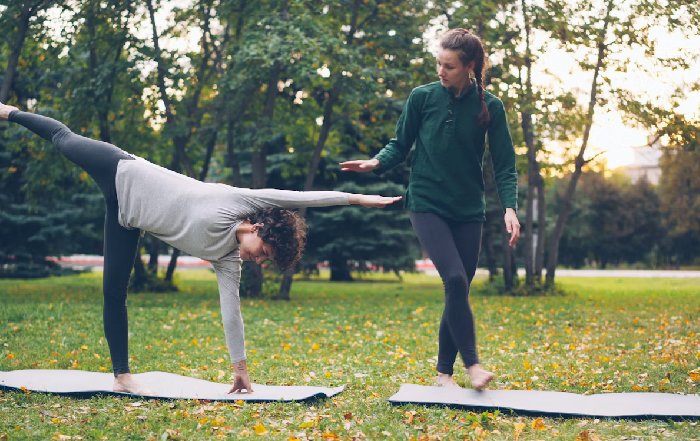
Yoga and mindfulness practices have moved from niche to mainstream across global markets, with adoption surging not only in their historical roots in India and broader Asia but also in North America, Europe, and increasingly in Africa and South America. For QikSpa, the yoga and wellness sections provide a natural home for exploring how these practices can be integrated into daily routines to cultivate mental resilience, emotional balance, and physical flexibility.
Scientific research from institutions such as University of Oxford, Massachusetts General Hospital, and National Center for Complementary and Integrative Health has documented the benefits of mindfulness and yoga for reducing symptoms of anxiety, depression, and chronic pain, while enhancing attention and emotional regulation. Readers can explore an evidence-based overview of mindfulness and meditation through the NCCIH's official resources. In high-pressure business environments, from Wall Street to the financial districts of London, Frankfurt, Hong Kong, and Singapore, these practices are increasingly embraced as performance tools rather than purely spiritual or recreational activities.
A modern personal wellness routine might include short daily meditation sessions, guided breathing exercises between meetings, or brief yoga flows to counteract prolonged sitting. For women balancing leadership roles and caregiving responsibilities in cities like Paris, Toronto, or Sydney, these micro-practices provide accessible moments of self-connection and regulation. For entrepreneurs and executives, they can serve as a buffer against decision fatigue and burnout. The key is to view yoga and mindfulness not as add-ons to an already overloaded schedule, but as integral components of mental hygiene, akin to brushing one's teeth or maintaining a clean workspace.
Global Perspectives, Sustainable Choices, and Travel
Wellness is inherently global, influenced by cultural traditions, local environments, and cross-border exchange of ideas. In 2026, individuals in the United States, United Kingdom, Germany, Canada, Australia, France, Italy, Spain, Netherlands, Switzerland, China, Sweden, Norway, Singapore, Denmark, South Korea, Japan, Thailand, Finland, South Africa, Brazil, Malaysia, and New Zealand are all contributing to a shared conversation about what it means to live well in a rapidly changing world. QikSpa's international and travel content reflects this diversity, highlighting how different regions interpret spa culture, nutrition, movement, and beauty.
At the same time, sustainability has become a non-negotiable dimension of personal wellness. Consumers increasingly recognize that their choices-whether in beauty products, fashion, food, or travel-have environmental and social implications. Organizations such as the United Nations Environment Programme and Ellen MacArthur Foundation provide guidance on sustainable consumption, circular economy principles, and responsible production, helping individuals and businesses align wellness with planetary health. Learn more about sustainable business practices and circular design through the Ellen MacArthur Foundation's insights. For QikSpa, the sustainable category is an essential platform for exploring how spa and salon services, wellness retreats, and daily routines can minimize environmental impact, from energy use and water conservation to ingredient sourcing and packaging.
Travel, once seen primarily as an escape, is now increasingly curated around wellness experiences-thermal spas in Switzerland, onsen culture in Japan, Ayurveda retreats in India, forest bathing in Scandinavia, and nature-based lodges in New Zealand and South Africa. These journeys offer opportunities to reset, learn, and adopt new practices that can be integrated into daily life back home. However, responsible wellness travel also considers carbon footprints, local community impact, and cultural respect. By highlighting destinations and practices that honor both personal rejuvenation and ethical responsibility, QikSpa helps readers craft travel plans that are aligned with long-term wellbeing rather than short-term indulgence.
Career, Business, and the Economics of Wellbeing
Wellness and work are no longer separate conversations. In 2026, organizations across sectors-from technology and finance to hospitality, fashion, and healthcare-recognize that employee wellbeing is directly linked to productivity, retention, innovation, and brand reputation. Global consulting firms and research organizations have quantified the economic benefits of robust wellness strategies, while leading companies in the United States, Europe, and Asia have integrated mental health support, flexible working arrangements, and comprehensive benefits into their talent strategies. Learn more about the business case for wellbeing and human capital investment through resources from the World Economic Forum.
For individuals navigating careers, whether as early-stage professionals, mid-career leaders, or entrepreneurs, crafting a personal wellness routine is therefore a strategic career decision. Burnout, once normalized in high-pressure industries, is now recognized as a systemic risk, and professionals are increasingly evaluating employers based on their commitment to wellbeing. QikSpa's business and careers content can support readers in assessing workplace cultures, negotiating flexible arrangements, and integrating wellness practices into their professional identities. This may include setting boundaries on availability, incorporating movement into the workday, leveraging mental health resources, or aligning career choices with personal values and lifestyle priorities.
For women in particular, who often navigate intersecting pressures related to career advancement, caregiving, and societal expectations, wellness is both a personal necessity and a form of empowerment. Global organizations like UN Women and International Labour Organization have highlighted the disproportionate impact of unpaid care work and workplace inequities on women's health and economic outcomes. Learn more about gender, work, and wellbeing through UN Women's research and data. By framing wellness not as a reward for success but as a prerequisite for sustainable achievement, QikSpa encourages women and men alike to design careers that support, rather than undermine, long-term health and fulfillment.
Bringing It All Together: A Personalized, Evolving Routine
Crafting a personal wellness routine for modern life is ultimately an exercise in integration, self-awareness, and adaptability. It requires synthesizing insights from spa and salon care, lifestyle design, beauty, nutrition, fitness, yoga, sustainable living, travel, and career strategy into a coherent daily and weekly rhythm that feels both structured and flexible. For readers of QikSpa, the journey begins with exploring the platform's interconnected sections-from wellness and health to beauty, lifestyle, and business-and then translating this knowledge into tailored practices.
A well-crafted routine is not static; it evolves with life stages, career shifts, geographic moves, and changing responsibilities. What works for a single professional in New York may need to be reimagined for a parent in Stockholm or an entrepreneur in Cape Town. The core principles, however, remain consistent: prioritize sleep and recovery, nourish the body with balanced and sustainable nutrition, move regularly in ways that build strength and joy, cultivate mental resilience through mindfulness and reflection, invest in beauty and grooming as expressions of self-respect, nurture relationships and community, and align work with values and long-term health.
In a world characterized by constant change and persistent uncertainty, a personal wellness routine becomes both a stabilizing anchor and a source of adaptive strength. By curating global insights, practical tools, and inspiring examples, QikSpa positions itself as a trusted companion on this journey, helping individuals across continents and cultures craft lives that are not only productive and successful, but also deeply well.
