
How to Build a Balanced Lunch Without Complicated Rules
Designing a satisfying, nourishing lunch does not have to mean counting grams, memorizing macros, or following rigid diet plans. For most people, a simple visual framework and a few flexible habits are enough to support steady energy, better focus, and long-term health. This approach fits easily into a busy workday, whether lunch is eaten at a desk, in a park, or between meetings.
This guide focuses on practical, no-math strategies to assemble a balanced midday meal, wherever you live and whatever your food culture, preferences, or budget. It draws on widely accepted nutrition principles from organizations such as the World Health Organization, the U.S. Department of Agriculture, and Harvard T.H. Chan School of Public Health, but translates them into everyday choices rather than strict rules.
For more ideas on integrating these habits into a broader healthy lifestyle, readers may also want to explore the wellness and nutrition coverage in the health, wellness, and food and nutrition sections.
A Simple Visual Formula: The "Balanced Plate" for Lunch
Nutrition guidelines from bodies such as the World Health Organization, USDA, and NHS in the UK all converge on a similar idea: most meals are healthier when they include vegetables or fruit, a source of protein, a source of carbohydrates (ideally whole grains or starchy vegetables), and some healthy fats. Instead of turning that into numbers, it can be easier to picture your lunchbox or plate divided into loose sections.
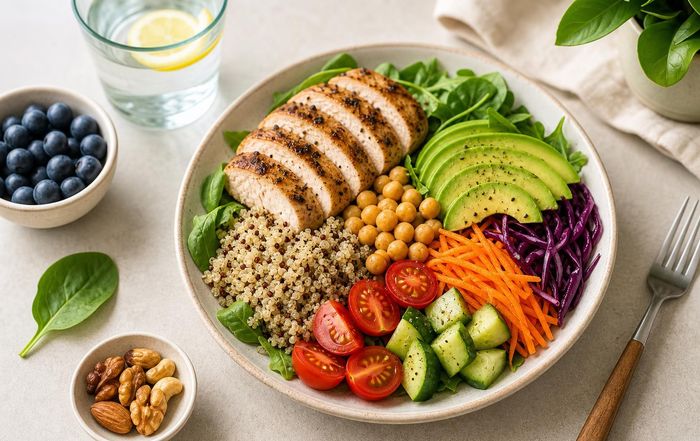
Roughly half of the space can go to vegetables and/or fruit, focusing on color, variety, and fiber. About a quarter goes to protein, which might be beans, lentils, tofu, fish, eggs, poultry, or meat, depending on your preferences. The remaining quarter is for carbohydrates such as whole-grain bread, brown or wild rice, quinoa, potatoes, or other staples common in your region. Healthy fats-like olive oil, avocado, nuts, seeds, or oily fish-can be sprinkled across the meal rather than occupying a separate "section." This is essentially the principle behind Harvard's Healthy Eating Plate, adapted for everyday lunches.
Thinking in proportions instead of perfection makes the framework forgiving. Some days, lunch may be more like one-third vegetables, one-third protein, one-third carbohydrates. Other days, it may be a soup and sandwich that roughly hits the same elements over the course of the meal rather than on a single plate. The aim is not to hit an exact ratio at every sitting, but to let this pattern guide most lunches over time so that your overall diet trends toward balance.
For readers who are also interested in how this pattern supports skin, hair, and body care from the inside out, related coverage in beauty and lifestyle can offer a broader perspective on self-care.
Step 1: Start with Vegetables and Fruit
Beginning meal planning with vegetables and fruit, rather than protein or starch, automatically nudges lunch in a more nutrient-dense direction. Public health agencies worldwide consistently recommend higher intake of produce for reduced risk of chronic disease; for example, both the World Health Organization and the European Food Safety Authority emphasize a variety of fruits and vegetables as daily staples.
For lunch, that might mean filling half your container with salad greens, roasted vegetables, sliced cucumber and carrots, or a mixed vegetable stir-fry. If fresh produce is expensive or seasonal where you live, frozen vegetables are typically picked and frozen at peak ripeness, and organizations like the Academy of Nutrition and Dietetics note that they can be nutritionally comparable to fresh options; their guidance at eatright.org supports using frozen and canned produce wisely. Canned vegetables and fruit packed in water or their own juice (rather than heavy syrup) are also practical choices.
Fruit can be part of the main meal or served alongside it. A sliced apple with nut butter, a bowl of berries, or orange segments can complete the "half plate" when vegetables are limited. The "eat the rainbow" idea is useful here: different colors generally indicate different beneficial plant compounds. Over a week rather than a single day, aim for a mix of greens, reds, oranges, purples, and whites. This variety fits naturally into many traditional cuisines and can be adapted to everything from bento boxes to mezze plates.
If you're already exploring plant-forward eating or sustainability, the sustainable living section offers additional context on how produce-rich meals can also support environmental goals.
Step 2: Add a Satisfying Source of Protein
Protein at lunch is less about building muscle alone and more about staying comfortably full, stabilizing blood sugar, and supporting everything from immune function to hair and nail health. Research summarized by groups such as the Harvard T.H. Chan School of Public Health and the American Heart Association suggests that including moderate amounts of protein, especially from plant and lean animal sources, is beneficial when balanced with plenty of vegetables and whole grains.
A simple rule of thumb is to add a palm-sized portion of protein to most lunches. Vegetarian and vegan options include lentils, chickpeas, black beans, tofu, tempeh, edamame, and hummus. Animal-based choices might be eggs, yogurt, cottage cheese, fish, shellfish, poultry, or modest portions of red meat. In many countries, traditional dishes such as dal, bean stews, tofu stir-fries, and fish-based soups already supply this element; the balanced lunch framework simply encourages making them a consistent part of your midday meal.
Texture and temperature can help protein feel more appealing. For example, adding crispy roasted chickpeas to a salad, marinating tofu for extra flavor, or pairing grilled chicken with a tangy yogurt sauce can make the meal feel like something to look forward to rather than a nutritional obligation. For those who exercise around lunchtime or after work, including protein can also support recovery, complementing guidance in the fitness and yoga sections.
Step 3: Choose Carbohydrates That Support Steady Energy
Carbohydrates are often misunderstood, but they are a key energy source, particularly for the brain and nervous system. The goal at lunch is not to eliminate them, but to favor types that digest more slowly, helping prevent the mid-afternoon slump. Organizations such as the USDA and Diabetes UK highlight the benefits of whole grains and high-fiber carbohydrates for blood sugar management and satiety.
In practice, that can mean choosing brown rice instead of white, whole-grain bread instead of highly refined loaves, or potatoes with their skins left on rather than peeled. Traditional staples like millet, sorghum, barley, oats, quinoa, buckwheat, and whole-grain noodles can all play the same role, depending on what is common and affordable where you live. If your lunch is something like sushi, a burrito, or a noodle bowl, you do not need to remove the starch; simply make sure vegetables and protein are present in generous amounts alongside it.
For those who notice strong energy crashes after very refined or sugary lunches, experimenting with higher-fiber options can be useful. Swapping a pastry and sweetened drink for a grain bowl or hearty soup with whole-grain bread, for example, may provide a more stable afternoon. Anyone with diabetes, prediabetes, or specific metabolic conditions should follow individualized guidance from a healthcare professional; resources from groups like the International Diabetes Federation can provide additional background.
Step 4: Don't Forget Healthy Fats and Flavor
Healthy fats are important for nutrient absorption, hormone production, brain function, and keeping meals satisfying. Guidance from bodies such as the American Heart Association encourages replacing some saturated fats with unsaturated fats from sources like olive oil, nuts, seeds, and fatty fish such as salmon, mackerel, or sardines.
At lunch, this might be as simple as dressing a salad with olive or rapeseed oil, sprinkling seeds over a grain bowl, adding avocado slices to a sandwich, or including a small handful of nuts on the side. Traditional ingredients like tahini, nut butters, and pestos also contribute healthy fats when used in moderation. These components not only support health but also carry flavor, which makes vegetable-heavy meals more enjoyable and easier to maintain over time.
Seasonings and condiments matter, too. Herbs, spices, citrus, garlic, ginger, chili, and fermented foods such as kimchi or yogurt-based sauces can transform a very basic combination of vegetables, grains, and protein into something vibrant. Some condiments are high in salt or added sugar, so it can be helpful to use them thoughtfully, but there is no need to ban them. A balanced lunch is more likely to become a habit when it tastes good and feels culturally familiar.
How Much Is Enough? Using Hunger, Not Math
One of the reasons many people find nutrition advice stressful is that it often revolves around calorie targets and rigid portion sizes. For everyday lunches, a more relaxed approach is to use internal cues-hunger, fullness, and energy levels-combined with a rough visual sense of volume. This aligns with ideas from intuitive and mindful eating approaches, which are discussed by organizations such as the Academy of Nutrition and Dietetics and various university health services.
A practical starting point is to build a lunch that fills your usual container or plate using the proportions described earlier: plenty of vegetables and/or fruit, a palm-sized serving of protein, a fist-sized serving of carbohydrates, and a thumb-sized or so portion of added fats (like dressings or spreads). Eat slowly when possible, and notice how you feel over the next three to four hours. If you find yourself ravenous well before your next meal, consider slightly increasing protein, healthy fats, or fiber-rich carbohydrates. If you feel uncomfortably full or sluggish, you might gently reduce portion sizes or emphasize lighter components like vegetables.
Workdays and energy demands vary, so lunch on a day of intense physical activity may look different from lunch on a quiet day at a desk. Over time, patterns emerge: some people discover that a soup plus bread is perfect, while others feel best with a grain bowl or leftovers from a substantial evening meal. The goal is not to eat identically every day, but to experiment within a simple framework until you find what keeps you energized and comfortable.
Making It Real: Fast, Flexible Lunch Ideas
Even a balanced framework will not be used if it takes too long or feels too complicated. For many people, the key is to repeat a few patterns with different ingredients rather than inventing new recipes every week. This is where batch cooking and "assembly" lunches can help, particularly for those juggling work, family, and other responsibilities.
One approach is to prepare a base grain (such as brown rice, quinoa, or whole-grain couscous), a tray of roasted vegetables, and one or two proteins (for example, baked tofu and grilled chicken) at the start of the week. Each morning, a lunch can be assembled in minutes by combining these with fresh greens, a sauce, and perhaps some nuts or seeds. Another approach relies on smart use of convenience foods: pre-washed salad mixes, canned beans, canned fish, whole-grain crackers, and pre-cut vegetables can be combined into a balanced meal without cooking.
Traditional dishes can also be adapted to fit the balanced plate idea without losing their identity. A pasta lunch becomes more balanced when half the volume is vegetables (such as spinach, tomatoes, or roasted peppers) and a protein source (like beans, lentils, or seafood) is added to the sauce. A rice-based lunch can be rounded out by including stir-fried or steamed vegetables and tofu, tempeh, eggs, or lean meats. For those interested in broader lifestyle optimization, including productivity and career performance, coverage in careers and business often intersects with how nutrition affects focus and resilience during long days.
Eating Out or Ordering In: Balancing on the Go
Not every lunch will be homemade. When eating in a café, workplace canteen, or restaurant, the same basic framework applies, but the choices might be more about rearranging what is offered than designing a meal from scratch. Public health campaigns such as the UK's "Eatwell Guide" from the NHS and similar resources from the Heart Foundation in Australia and Health Canada emphasize simple swaps rather than perfection.
In practical terms, that might mean choosing a dish that already includes vegetables and a protein-such as a salad with beans, tofu, or grilled fish; a vegetable-rich curry; or a grain bowl-and then adjusting sides. You might ask for extra vegetables instead of fries, choose water or unsweetened tea instead of a sugary drink, or share a very large portion rather than finishing it out of habit. If a sandwich or wrap is the most convenient option, adding a side salad or piece of fruit can help round out the meal.
Takeaway and delivery foods can be balanced in similar ways. Ordering one or two vegetable dishes alongside a main, choosing steamed or grilled options more often than heavily fried ones, and saving very rich meals for days when they can be enjoyed slowly can all help align convenience with wellbeing. For many people, the aim is not to avoid certain foods entirely, but to let the average lunch over weeks and months reflect the balanced pattern more often than not.
Navigating Special Diets and Cultural Food Traditions
Many people follow specific dietary patterns-vegetarian, vegan, gluten-free, low-lactose, religious dietary laws, or medically prescribed diets. The balanced lunch framework is flexible enough to fit most of these, as it focuses on food groups rather than particular ingredients. The key is to identify what counts as protein, carbohydrates, fats, and vegetables or fruit within your own tradition and constraints.
For example, a balanced vegan lunch might include a lentil and vegetable stew over brown rice, with a side of fruit and a drizzle of olive oil. A gluten-free lunch could be built around quinoa, potatoes, millet, or rice instead of wheat-based breads or pasta. Those following religious dietary laws can work within permitted foods to ensure that each meal still includes vegetables or fruit, a protein source, and a carbohydrate. When medical conditions require more precise adjustments-such as kidney disease, celiac disease, or severe food allergies-guidance from a registered dietitian or specialist clinic, often accessible through national health systems like the NHS or Mayo Clinic, is important.
Cultural dishes that have been eaten for generations often already embody balance when consumed in traditional portions and contexts. Many Asian, Mediterranean, African, and Latin American meals naturally combine grains or starchy vegetables, legumes or animal proteins, and a variety of vegetables. Rather than discarding these in favor of "health foods," it is often more sustainable to highlight and slightly adjust existing dishes-adding extra vegetables, moderating very heavy sauces, or including fruit-so that lunch feels familiar and enjoyable.
Readers exploring broader lifestyle and identity topics related to food, body image, and gender roles may find further nuance in the women and lifestyle sections, which often touch on how nutrition expectations intersect with culture and daily life.
Small Habits That Make Balanced Lunches Easier
The difference between knowing what a balanced lunch looks like and actually eating one most days often comes down to small, repeatable habits rather than willpower. One useful habit is to decide on lunch the night before, even if you are not preparing it fully. Simply writing down "tomorrow: leftover lentil curry + salad + yogurt" or "canteen: grain bowl with extra vegetables" reduces decision fatigue the next day.
Another habit is to keep a short list of "default lunches" that you enjoy and can assemble quickly from ingredients you usually have on hand. Rotating between three to five of these can make life easier than chasing constant novelty. A third habit is to stock a few "emergency" items at home or at work-such as canned beans, whole-grain crackers, nuts, and frozen vegetables-so that a balanced meal is still possible when plans change.
Hydration and breaks matter as well. Drinking water with lunch and taking even a short pause away from screens can support digestion and stress levels, complementing broader wellbeing strategies discussed in wellness and travel for those frequently on the move. Over time, these small supports make it more realistic to maintain a balanced lunch habit without feeling like it dominates your day.
Bringing It All Together
A balanced lunch does not require strict rules, calorie counting, or complex tracking apps. It rests on a few clear ideas: give vegetables and fruit plenty of space, include a satisfying protein source, choose carbohydrates that support steady energy, add some healthy fats and flavor, and let your own hunger and fullness guide portion tweaks over time. This pattern can be expressed through countless cuisines, from simple sandwiches and soups to elaborate home-cooked dishes and quick convenience-food combinations.
When lunch becomes a reliable moment of nourishment rather than a rushed afterthought, it can quietly support everything else-work, study, caregiving, movement, and rest. With a flexible framework and a handful of realistic habits, building that kind of lunch is less about perfection and more about gentle consistency over weeks and months.
