
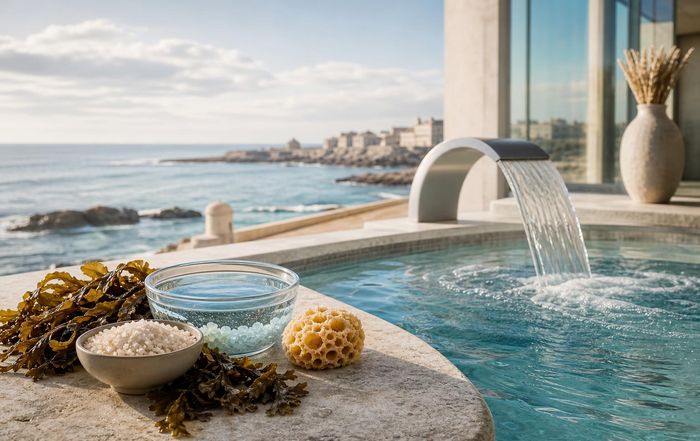
French Thalassotherapy: Understanding Seawater Spa Rituals
Along much of the French coastline, especially in Brittany and along the Atlantic and Mediterranean shores, "going to the sea" means more than a beach holiday. It often means checking into a thalasso clinic or spa, where seawater, marine mud, and seaweed are prescribed almost like medicine. French thalassotherapy has evolved into a structured wellness practice that blends medical supervision, hydrotherapy, and spa rituals, attracting visitors from across Europe, North America, and beyond who are looking for relief from stress, joint pain, skin issues, and burnout.
This article explores what thalassotherapy actually is, how a typical seawater spa stay works, what the evidence says about its benefits and limits, and how to recreate elements of these rituals at home for a quick but meaningful sense of reset.
What is Thalassotherapy?
Thalassotherapy is a therapeutic use of the marine environment-seawater, algae, mud, sand, and the coastal climate-for preventive health and rehabilitation. The term comes from the Greek "thalassa" (sea) and "therapeia" (treatment). In France, it has a specific meaning: a residential program, usually of several days, in a dedicated center located directly by the sea, using pumped and filtered seawater in controlled treatments under professional supervision.
French thalassotherapy centers are typically classified as medical or paramedical establishments, often working with physicians, physiotherapists, dietitians, and specialized spa therapists. Many belong to professional bodies such as the Fédération Internationale de Thalassothérapie and follow standards around hygiene, seawater renewal, and staff qualifications. While these centers can feel luxurious, they are not simply beach resorts with a few sea-inspired treatments. They function more like wellness clinics, where programs are designed for specific goals such as post-natal recovery, back pain, stress management, or athletic conditioning.
Internationally, thalassotherapy is practiced in several coastal countries, but its most structured form is found in France, where the concept is supported by long-standing medical interest in balneotherapy and hydrotherapy. French centers often reference research on balneology and physical medicine published by institutions such as INSERM (the French National Institute of Health and Medical Research) and draw on broader evidence around aquatic therapy and chronic pain from organizations like the World Health Organization at https://www.who.int/ and the National Institutes of Health at https://www.nih.gov/.
A Brief History of French Seawater Cures
The idea of the sea as medicine is ancient, but French thalassotherapy took recognizable shape in the 19th and early 20th centuries. Physicians along the Atlantic and Channel coasts began recommending "sea cures" for anemia, tuberculosis recovery, nervous exhaustion, and rheumatism. Towns like Roscoff, La Baule, Biarritz, and Deauville developed reputations as therapeutic seaside destinations, combining climate therapy (sea air, moderate sun exposure, and walking) with immersion in seawater baths.
By the mid-20th century, advances in pumping and filtration allowed centers to draw seawater directly from the ocean, heat it, sterilize it, and circulate it through pools and treatment cabins. This marked the shift from simple sea bathing to structured thalassotherapy, with individualized programs, precise treatment times, and integration of physiotherapy. French health authorities and professional associations gradually defined standards for water quality, renewal frequency, and facility hygiene, similar to the way thermal spas are regulated.
Today, French thalasso centers sit at the intersection of healthcare, wellness, and tourism, often collaborating with local hospitals or sports organizations while also welcoming international spa visitors. As wellness travel has grown, many centers have broadened their offerings to include yoga, mindfulness, and nutrition workshops, aligning with interests in wellness, fitness, and lifestyle that go beyond traditional medical cures.
Core Elements of Thalassotherapy
While each French thalasso has its own style, most share a set of signature seawater spa rituals. These are usually combined into daily "circuits" or tailor-made programs.
Seawater Pools and Hydrotherapy Circuits
The heart of most centers is a large pool complex filled with heated seawater, usually between 32-35°C (89-95°F). The water is pumped from offshore, filtered, and often renewed daily or several times per week, depending on local regulations and tides. Within these pools, jets, bubble beds, swan-neck fountains, counter-current lanes, and walking corridors are used to massage muscles, mobilize joints, and stimulate circulation.
Sessions typically last 20-30 minutes and might be supervised by a physiotherapist for people with back pain or mobility issues. For others, the pool acts as an active relaxation space, where gentle movement and buoyancy reduce load on the joints. The principle is similar to aquatic physiotherapy used in rehabilitation clinics worldwide and supported by research summarized by organizations such as the American Physical Therapy Association at https://www.apta.org/ and the Chartered Society of Physiotherapy at https://www.csp.org.uk/.
Individual Seawater Baths and Jet Showers
Beyond the main pools, guests often receive individual hydrotherapy treatments. A common ritual is the hydromassage bath, in which a tub is filled with warm seawater and equipped with multiple jets programmed to work sequentially along the body. Therapists may add algae extracts or essential oils, aiming to combine mineral exposure with muscle relaxation.
Another hallmark is the affusion shower or Vichy shower, where fine streams of warm seawater rain down over the body while a therapist performs a gentle massage. This is often described as deeply sedating, making it popular in anti-stress programs. More stimulating are jet showers delivered by a therapist with a hose from several meters away, using high-pressure streams to massage large muscle groups. These require training to avoid discomfort or bruising and are usually contraindicated in people with circulatory disorders or fragile skin.
Seaweed Wraps and Marine Mud
Many French thalasso rituals center on algae and marine mud, which are rich in minerals such as iodine, magnesium, and trace elements. In a typical wrap, warm seaweed paste or mud is applied to the body, which is then wrapped in a thermal blanket or placed on a heated table. The aim is to promote vasodilation, enhance local circulation, and encourage muscle relaxation while allowing minerals to interact with the skin.
Seaweed wraps are particularly associated with programs targeting cellulite, water retention, and joint pain. While the exact mechanism of mineral absorption through intact skin remains debated, some studies suggest that warm marine applications can have anti-inflammatory and analgesic effects, similar to other forms of mud therapy used in rheumatology. Reviews of balneotherapy and mud therapy, including those discussed by the European League Against Rheumatism at https://www.eular.org/, indicate modest benefits in osteoarthritis and chronic low back pain when used alongside standard medical care.
Inhalations and Marine Aerosols
In some centers, particularly those with a history in respiratory care, seawater is nebulized for inhalation therapies intended to support sinus and bronchial health. These treatments are often recommended for people with chronic rhinitis, mild asthma, or recurrent respiratory infections, though they are not a substitute for conventional medical management. The concept draws on broader research into saline inhalation and lung health, an area explored by organizations like the European Respiratory Society at https://www.ersnet.org/.
More informally, simply walking along the seafront and breathing cool, humid air is considered part of the cure. The combination of moderate exercise, negative ions, and a change of environment is often cited by guests as one of the most restorative aspects of a stay, even though it is less "high-tech" than the spa facilities.
Typical Programs: From Anti-Stress to Post-Natal Recovery
French thalasso centers generally do not sell treatments one by one in isolation. Instead, they offer programs or "cures" lasting from a weekend to two weeks, each built around a theme or health objective. These programs are usually created with input from physicians or physiotherapists and may include both spa treatments and lifestyle coaching.
Common program types include:
Stress and burnout relief: A mix of relaxing hydrotherapy, gentle massages, guided relaxation or meditation, and sometimes sleep coaching. These programs respond to rising concerns about burnout and workplace stress highlighted by organizations like the World Health Organization and the International Labour Organization at https://www.ilo.org/.
Back and joint pain: Targeted hydrotherapy exercises, underwater jet massages, mud or seaweed wraps, and physiotherapy sessions. These often complement existing medical treatment and may help people with chronic low back pain, osteoarthritis, or post-surgical stiffness.
Slimming and metabolic balance: Supervised physical activity, nutritional consultations, body composition analysis, and treatments aimed at circulation and water retention. These are not quick-fix weight-loss cures, but rather attempts to kick-start lifestyle changes, sometimes linked to broader health and food and nutrition education.
Post-natal and women's health: Programs for new mothers may combine pelvic floor rehabilitation (under medical supervision), gentle aquatic exercise, back care, and restorative treatments. Some centers also offer cycles focused on perimenopause, combining marine treatments with educational workshops and psychological support, reflecting growing attention to women's health and wellbeing.
Sport and performance: For athletes or active individuals, these programs emphasize recovery, injury prevention, and muscular relaxation, often incorporating cryotherapy, targeted stretching, and coaching around training loads.
Most programs include access to fitness facilities and group classes such as yoga, Pilates, or aqua gym, aligning with broader interests in yoga and fitness. Nutrition is increasingly integrated, with many centers working with dietitians trained in evidence-based guidelines from bodies such as Santé Publique France at https://www.santepubliquefrance.fr/ or Public Health England at https://www.gov.uk/.
What Does the Science Say?
The scientific picture around thalassotherapy is nuanced. There is reasonably strong evidence that warm-water immersion, hydrotherapy, and balneotherapy can improve symptoms in conditions such as osteoarthritis, chronic low back pain, and fibromyalgia when used as an adjunct to standard care. Systematic reviews referenced by institutions like the Cochrane Collaboration at https://www.cochrane.org/ and health agencies including the NHS at https://www.nhs.uk/ suggest moderate improvements in pain, function, and quality of life for some patients.
However, research specific to French-style thalassotherapy-with its combination of seawater, marine products, and coastal climate-is more limited and heterogeneous. Many published studies are small, lack long-term follow-up, or are conducted within single centers, making it difficult to generalize results. Some benefits reported include reduced pain scores, improved sleep, and decreased anxiety and depression symptoms after multi-day programs, but these outcomes may be influenced by multiple factors: time off work, structured rest, social support, and behavior change, not just the seawater itself.
From a critical perspective:
There is no strong evidence that thalassotherapy can cure chronic diseases or replace medical treatment for serious conditions such as cancer, autoimmune disorders, or major psychiatric illness. Reputable centers typically emphasize complementarity rather than replacement.
Claims about detoxification through sweating in wraps or saunas are often overstated. The liver and kidneys remain the primary organs of detoxification, and while sweating can eliminate some substances, it is not a magic cleanse.
Assertions about mineral absorption through the skin are still debated. While the skin can allow limited transdermal transport under certain conditions, the extent to which soaking in mineral-rich seawater meaningfully changes systemic mineral status is unclear.
On the positive side, the evidence is stronger around mental health and stress. Time in nature, gentle physical activity, and structured rest are all associated with better mood and reduced stress markers, according to research summarized by institutions like Harvard T.H. Chan School of Public Health at https://www.hsph.harvard.edu/ and the American Psychological Association at https://www.apa.org/. Thalassotherapy packages these elements into a coherent experience, which many guests find easier to commit to than self-directed lifestyle changes.
For readers considering a stay for health reasons, it is wise to consult a physician beforehand, especially if there are cardiovascular, respiratory, or metabolic conditions. In France, some medical thalasso programs may be partially reimbursed in specific circumstances, but international visitors should view them as wellness investments rather than insured medical treatments.
Who Might Benefit Most-and Who Should Be Cautious
French thalassotherapy is often recommended or self-chosen by people who:
Live with chronic musculoskeletal pain, such as osteoarthritis or low back pain, and want a structured environment for movement and relief.
Experience high stress, burnout, or sleep disturbances and need time away from their normal environment to reset.
Are in post-operative or post-natal phases, where gentle aquatic exercise and supervised rest can support recovery.
Have sedentary lifestyles and want a guided introduction to movement, nutrition, and self-care without the intensity of a boot camp.
However, caution or medical clearance is important for those with:
Unstable cardiovascular disease, severe hypertension, or recent cardiac events, as hot water and jets can affect blood pressure and heart rate.
Severe respiratory conditions, where humid environments or exposure to aerosols may be problematic.
Open wounds, acute skin infections, or certain dermatologic conditions that could be aggravated by seawater or communal pools.
Pregnancy, especially high-risk pregnancies, where heat and pressure treatments may be restricted.
Reputable centers conduct an intake assessment and may require a medical questionnaire or certificate, particularly for intensive programs. International travelers should also consider practicalities such as travel fatigue, language support, and access to emergency medical care in the region they choose.
Sustainability and the Marine Environment
Thalassotherapy depends on a healthy sea, which has pushed many French centers to address sustainability and environmental impact more directly in recent years. Pumping and heating seawater, laundering towels and robes, and operating large facilities have energy and water footprints. At the same time, algae harvesting and coastal development can affect local ecosystems if not managed carefully.
Some centers now emphasize:
Use of renewable energy sources and heat-recovery systems to warm seawater and buildings.
Strict controls on algae and seaweed harvesting, sometimes partnering with certified suppliers who follow sustainable collection practices.
Reduction in single-use plastics and increased use of biodegradable spa products.
Education for guests on marine conservation, often in collaboration with organizations such as Surfrider Foundation Europe at https://www.surfrider.eu/ or WWF at https://www.worldwildlife.org/.
For readers who care about eco-conscious travel and sustainable wellness, it can be useful to ask potential centers about their environmental certifications, energy use, and sourcing of marine ingredients before booking.
Choosing a French Thalassotherapy Stay
For those planning a trip, several practical factors help distinguish between options along the French coast.
Location plays a major role. Brittany and the Atlantic coast are known for more invigorating climates, with brisk winds and cooler temperatures that some people find particularly refreshing, especially in autumn and spring. The Mediterranean offers milder winters and sunnier conditions, appealing to those seeking a gentler climate. Access is also important: coastal towns near major train lines or airports may be easier for international visitors to reach.
The profile of the center matters as well. Some establishments lean toward medical and rehabilitation services, with stronger links to local hospitals and more clinical atmospheres. Others focus on relaxation and spa and salon experiences, integrating beauty treatments, fashion-conscious amenities, and gourmet cuisine. Reading program descriptions carefully can clarify whether a center emphasizes health recovery, beauty and wellness, or a blend of both.
It is also worth examining:
The ratio of treatments to free time: Some intensive cures schedule multiple treatments each morning and afternoon, leaving little unstructured space. Others build in more time for walks, reading, or exploration of nearby travel attractions.
The availability of English or other language support, especially for medical consultations and group classes.
The qualifications of staff, particularly physiotherapists, dietitians, and medical personnel.
The food philosophy: Menus increasingly highlight local, seasonal, and plant-forward dishes, aligning with broader trends in food and nutrition. Visitors with specific dietary needs should confirm options in advance.
For those unable to travel to France, similar concepts exist in other countries-sometimes under the banner of "marine spa," "seawater therapy," or "balneotherapy." Checking whether a facility follows credible hygiene and safety standards and employs qualified therapists is more important than the marketing label.
Bringing Thalasso-Inspired Rituals Home
Not everyone can book a week on the Breton coast, but many of the principles behind French thalassotherapy can be adapted into accessible home rituals and everyday habits that support health and lifestyle.
Warm-water immersion is perhaps the easiest element to recreate. A simple bath at home, kept comfortably warm rather than overly hot, can mimic some of the muscle-relaxing and circulation-enhancing effects of hydrotherapy. Adding mineral salts or sea salt will not perfectly replicate seawater chemistry, but the combination of warmth, buoyancy, and quiet can still reduce muscle tension and encourage parasympathetic nervous system activation. Gentle stretching in the bath or immediately afterward can further ease stiffness.
If one lives near the coast, regular sea walks can serve as mini thalasso sessions. Walking along the shoreline, breathing deeply, and allowing the mind to disengage from screens is a powerful, low-cost reset. Even in urban environments, seeking out green or blue spaces-parks, rivers, lakes-aligns with research on nature exposure and mental wellbeing shared by institutions such as Stanford University at https://www.stanford.edu/.
Elements of seaweed-based skincare can be integrated through creams, masks, or wraps containing marine extracts, although quality varies widely. When considering at-home products, it is wise to look for transparent ingredient lists and brands that reference dermatological testing or collaborations with recognized laboratories, similar to those highlighted by organizations like French cosmetics federation FEBEA at https://www.febea.fr/. As with any skincare, patch testing and attention to allergies are important.
Finally, the structured rhythm of a thalasso stay-set mealtimes, scheduled movement, protected rest periods-may be as therapeutic as the seawater itself. Adopting small routines, such as a nightly wind-down bath, a weekly "digital-free" coastal or park walk, or a consistent bedtime, can bring a taste of the thalasso approach into everyday life, offering a quick but meaningful escape from stress even far from the French coast.
French thalassotherapy sits at a crossroads between medicine, nature, and spa culture. While not a cure-all, it offers a distinctive way of working with the sea to support pain relief, relaxation, and lifestyle change. For some visitors, a stay becomes a turning point, prompting new habits around movement, rest, and self-care. For others, it is simply a deeply restorative pause by the water. Either way, understanding the rituals and realities behind the marketing makes it easier to decide whether a seawater spa experience belongs in one's personal wellness journey-and how to bring a little of that coastal calm home.
