
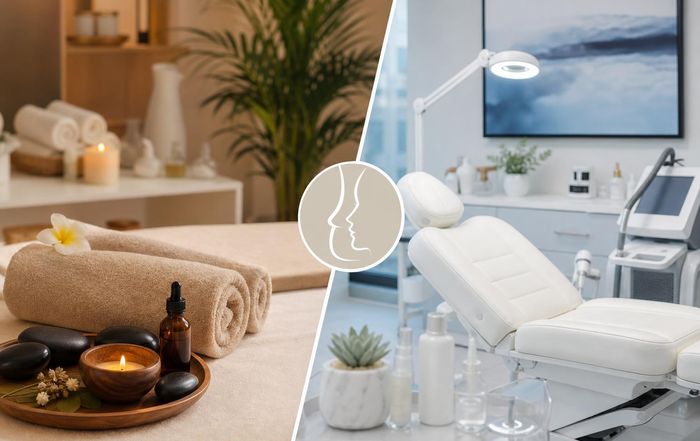
Day Spa vs Medical Spa: Services, Safety, and Key Differences
For anyone craving relaxation or a visible skin refresh, "spa" can mean many things. Yet there is a major difference between a tranquil day spa offering massages and facials, and a medical spa providing injectables and laser treatments. Understanding how these two types of facilities differ in services, staff qualifications, safety standards, and expected results is essential before booking an appointment-especially when treatments involve needles, devices, or downtime. This calm guide breaks down what distinguishes a day spa from a medical spa, which services each typically offers, how to decide what you really need, and what to ask before you commit.
What is a day spa?
A day spa focuses on relaxation, pampering, and non-medical beauty or wellness services. The atmosphere is usually serene, with dim lighting, soothing music, and amenities like robes, herbal tea, and steam rooms. The primary goal is to help guests unwind, de-stress, and feel refreshed, rather than to deliver medical-grade aesthetic change.
Day spas are often staffed by licensed massage therapists, estheticians, nail technicians, and spa attendants. Regulations vary by country and region, but many services-such as massage and basic facials-require professional licensing or certification. However, day spa practitioners do not practice medicine, cannot prescribe medications, and should not perform invasive procedures. Their treatments work mainly on the surface of the skin or via relaxation of muscles and the nervous system.
For people interested in broader lifestyle shifts, many day spas overlap with the themes covered in wellness and lifestyle content: stress management, self-care rituals, body confidence, and simple routines that support health between visits. While they can complement a healthy lifestyle, day spas are not a replacement for medical care or dermatology.
Typical day spa services
Although menus differ from country to country and even from one city to the next, most day spas offer a core set of non-medical services designed for relaxation and surface-level skin care.
Common offerings include full-body and targeted massages such as Swedish, deep tissue, hot stone, aromatherapy, prenatal, or sports massage. These treatments are generally performed by licensed massage therapists and are intended to ease muscle tension, improve circulation, and support relaxation. Organizations like the American Massage Therapy Association highlight evidence that massage can reduce stress and help with some types of pain when performed appropriately, though it is not a substitute for medical treatment for serious conditions. Readers can explore more about professional standards via resources such as https://www.amtamassage.org/.
Facials at day spas are typically customized to skin type and may include cleansing, exfoliation, extractions, masks, facial massage, and basic use of tools like steamers. These treatments are usually performed by licensed estheticians, who are trained in topical skincare and product selection but do not diagnose or treat skin diseases. Some spas offer add-ons such as mild chemical exfoliants, LED light therapy, or non-invasive devices marketed for toning or firming; the strength and depth of these treatments are generally lower than what is found in medical settings.
Additional services might include body scrubs and wraps, manicures and pedicures, brow shaping and tinting, lash lifts, and sometimes basic waxing. Many day spas incorporate elements of beauty, such as makeup lessons or grooming services, with a focus on short-term visible results and a pleasant experience rather than long-term clinical change. Some also integrate wellness-adjacent offerings like gentle stretching, guided relaxation, or mindfulness sessions that align with broader health and yoga interests.
What is a medical spa?
A medical spa-often called a med spa or medi-spa-sits between a dermatologist's or plastic surgeon's clinic and a traditional day spa. The environment may still feel luxurious, but the core purpose is to deliver medical-grade aesthetic treatments under clinical oversight. These facilities offer procedures that go beyond relaxation and into skin rejuvenation, anti-aging, and sometimes body contouring, often using prescription-strength products, injectables, or energy-based devices.
In most jurisdictions, a medical spa must operate under the supervision of a licensed physician, commonly a dermatologist, plastic surgeon, or other doctor with training in aesthetic medicine. Regulations differ widely across countries and states or provinces: some require a physician to be on-site during certain procedures, others allow nurse practitioners or physician associates to perform treatments under a doctor's supervision. To understand local rules, consumers can check with national or regional medical boards or professional societies such as the American Society of Plastic Surgeons at https://www.plasticsurgery.org/ or the American Academy of Dermatology at https://www.aad.org/.
Because medical spas provide procedures that can alter the skin's structure, carry higher risk, and sometimes require downtime, they are generally more regulated than day spas. They may also collect medical histories, use prescription medications, and require informed consent forms similar to other healthcare settings.
Common medical spa services
Medical spa menus vary, but many focus on minimally invasive cosmetic procedures backed by clinical research. These are not typically available at ordinary day spas, or if they are, they should raise questions about whether proper medical oversight is in place.
Injectable treatments are among the most recognizable services. Neuromodulators like botulinum toxin type A (commonly known by brand names such as Botox, Dysport, or Xeomin) are used to temporarily relax specific facial muscles to soften expression lines. Dermal fillers made from substances like hyaluronic acid can add volume to lips, cheeks, or under-eye areas, or smooth deeper folds. Because these involve needles and can cause complications such as bruising, infection, or in rare cases vascular occlusion, they must be performed by appropriately trained medical professionals. Safety guidance from organizations like the U.S. Food and Drug Administration at https://www.fda.gov/ and regulators such as the UK's Medicines and Healthcare products Regulatory Agency at https://www.gov.uk/ emphasizes choosing qualified providers and approved products.
Laser and energy-based treatments are another major category. Medical spas may offer laser hair removal, intense pulsed light (IPL) for pigmentation and redness, fractional laser resurfacing, radiofrequency for skin tightening, or combined technologies. These devices can deliver significant improvement in tone, texture, and scars, but they also carry risks of burns, pigment changes, and eye injury if used incorrectly. Reputable facilities follow manufacturer protocols, use protective eyewear, and tailor settings to skin type, often referencing frameworks such as the Fitzpatrick skin type classification developed in academic dermatology.
Other common services include medical-grade chemical peels (using higher percentages of acids like glycolic, salicylic, or trichloroacetic acid), microneedling (sometimes combined with platelet-rich plasma), medical facials with prescription-strength actives, and body contouring technologies such as cryolipolysis or radiofrequency fat reduction. Many medical spas also retail clinical skincare lines that rely on ingredients supported by dermatological research, sometimes with guidance from organizations like the American Academy of Dermatology or academic centers such as Harvard Health Publishing at https://www.health.harvard.edu/.
Staff qualifications and medical oversight
One of the most important differences between day spas and medical spas is who is allowed to perform which treatments-and how closely those professionals are supervised. In a day spa, services are typically delivered by massage therapists, estheticians, and cosmetologists whose training focuses on relaxation, basic skin care, and grooming. While these professionals may be highly skilled within their scope, they are not licensed to practice medicine and should not diagnose skin diseases or perform invasive procedures.
In a medical spa, by contrast, there must be a designated medical director-usually a physician-who is responsible for clinical protocols, patient safety, and compliance with healthcare regulations. Depending on local laws, treatments such as injectables, deep chemical peels, and certain laser procedures may be performed only by doctors, or by nurses and other medical professionals under direct or indirect supervision. Reputable med spas will clearly identify their medical director, list practitioner credentials, and be transparent about who performs each procedure. Patients can often verify licenses with national or regional medical councils, such as the General Medical Council in the UK via https://www.gmc-uk.org/ or equivalent bodies elsewhere.
Medical spas also tend to use more formal intake processes, including medical history forms, medication lists, and consent documents. This is especially important for people with chronic illnesses, autoimmune conditions, clotting disorders, or histories of keloid scarring, as these can affect both candidacy for treatment and risk of complications. In addition, reputable med spas maintain protocols for managing adverse events and have arrangements for referral or escalation if something goes wrong.
For international readers, standards and enforcement vary significantly. Some countries have more stringent oversight of aesthetic medicine than others, and in some markets, "med spa" is used loosely in marketing without clear regulation. Checking with national health ministries or professional associations, such as the World Health Organization at https://www.who.int/ for broad public health guidance or local dermatology societies, can help you understand what to expect in your region.
Safety, risks, and when medical care matters
Both day spas and medical spas can be safe and beneficial when properly regulated and staffed, but the nature and level of risk differ. Day spa services like standard massage, basic facials, and manicures are generally low risk for healthy individuals, though there are still considerations. Massage may be contraindicated for certain cardiovascular conditions or acute injuries; aggressive extractions or poor hygiene can irritate the skin or spread infection; and improper sterilization of manicure tools can lead to fungal or bacterial problems. Public health agencies and professional associations, including many national health departments accessible via portals like https://www.cdc.gov/ for the United States, provide general hygiene and infection-control guidance that reputable spas should follow.
Medical spa procedures carry higher potential benefits but also higher stakes. Injectables can cause bruising, swelling, asymmetry, or more serious complications if product is inadvertently injected into a blood vessel. Laser and energy devices can cause burns, scarring, or pigment changes, especially in darker skin tones when used by inexperienced operators. Deeper chemical peels and microneedling can trigger prolonged redness, infection, or post-inflammatory hyperpigmentation. Because of these risks, it is critical that providers have appropriate medical training, use approved devices and products, and offer realistic counseling about potential side effects and downtime.
Anyone with existing skin conditions such as eczema, psoriasis, rosacea, or a history of skin cancer should consult a dermatologist before undertaking intensive aesthetic procedures. Organizations like the British Association of Dermatologists at https://www.bad.org.uk/ and patient-focused sites from academic institutions such as Mayo Clinic at https://www.mayoclinic.org/ offer reliable information about how various treatments interact with specific conditions. In some cases, care in a medical clinic or hospital-based dermatology department may be more appropriate than a med spa.
It is also worth noting that not all "natural" or "holistic" treatments are automatically safe. Strong essential oils can irritate the skin or trigger allergies, and unregulated supplements offered in wellness settings may interact with medications. For readers exploring broader wellness and sustainable self-care practices, evidence-based caution and open communication with healthcare providers remain important.
Results and expectations: pampering vs clinical change
A key distinction between day spas and medical spas lies in what kind of results a person can realistically expect. Day spa experiences are designed primarily for short-term relaxation and visible refreshment. After a massage or facial, most people feel calmer, less tense, and perhaps notice a temporary glow or smoother appearance due to hydration and gentle exfoliation. These benefits can be meaningful for mental wellbeing, especially when integrated into a broader wellness and fitness routine that includes sleep, movement, and nutrition.
Medical spas, on the other hand, aim for more measurable, often longer-lasting aesthetic changes. Injectables can soften wrinkles or restore volume for several months to over a year, depending on the product. Laser treatments may reduce pigmentation or redness, smooth acne scars, or tighten lax skin over a series of sessions. Body contouring devices can modestly reduce fat in targeted areas, although they are not weight-loss solutions and work best in combination with healthy habits. Many of these procedures have been studied in clinical trials published in peer-reviewed journals indexed through resources such as PubMed at https://pubmed.ncbi.nlm.nih.gov/, which can be helpful for those who want to delve into the evidence.
However, even in a med spa, results are not guaranteed, and outcomes can vary based on age, genetics, lifestyle, and adherence to aftercare. Honest providers will explain that no non-surgical treatment can replicate the dramatic changes of surgery, and that maintenance sessions are often necessary. They will also screen for unrealistic expectations and discuss psychological aspects of cosmetic procedures, something increasingly recognized by professional societies such as the International Society of Aesthetic Plastic Surgery at https://www.isaps.org/.
How to decide which type of spa is right for you
Choosing between a day spa and a medical spa starts with clarifying your goals. If your priority is stress relief, a mental reset, or a gentle boost to your skin's appearance before an event, a day spa is likely the better fit. Think of this as part of your broader self-care strategy, alongside practices like yoga, mindful movement, and balanced eating often explored in food and nutrition and health coverage. For many people, regular low-risk pampering can support emotional wellbeing and may even encourage healthier lifestyle habits.
If, instead, your focus is on addressing specific aesthetic concerns-persistent acne scarring, pronounced sun damage, deeper wrinkles, significant volume loss, or unwanted hair that has not responded to simpler methods-a medical spa may be more appropriate. In that case, it is often wise to begin with a consultation that feels more like a medical appointment than a sales pitch. You should be asked about your health, medications, and past procedures, and be given time to ask questions and consider options rather than being rushed into treatment.
Budget and tolerance for downtime also matter. Day spa services are usually less expensive per visit and have essentially no recovery period. Medical spa treatments can cost more and may require planning around redness, swelling, or activity restrictions. For some, a combined approach works well: occasional medical treatments for targeted changes, with regular day spa visits to maintain skin health and relaxation in between.
Finally, consider your personal comfort level with medical environments. Some people appreciate the clinical feel of a med spa, while others find it intimidating and prefer the softer atmosphere of a day spa. There is no single "right" choice-only the option that best aligns with your needs, values, and circumstances at a given time.
Questions to ask any spa before you book
Regardless of whether you are leaning toward a day spa or a medical spa, a few key questions can help you assess professionalism and safety.
It is reasonable to ask who owns and operates the facility, and in the case of a medical spa, who the medical director is and what their specialty and training are. You can also ask who will perform your specific treatment, what licenses or certifications they hold, and how long they have been performing that procedure. Reputable providers are usually proud to share their qualifications and may reference membership in organizations such as national dermatology or plastic surgery societies, or in aesthetic medicine groups like the American Med Spa Association at https://www.americanmedspa.org/.
Hygiene and safety protocols are equally important. Ask how instruments are sterilized, how linens are handled, and what infection-control measures are in place. For procedures involving needles or blood, single-use, properly disposed equipment is a must. It is also reasonable to inquire about what happens if something goes wrong-how complications are handled, whether there is an on-call physician, and what emergency procedures exist.
For device-based treatments, ask which technologies are used, whether they are approved by relevant regulators (for example, the FDA in the United States or the European Medicines Agency at https://www.ema.europa.eu/ in the EU), and what kind of training operators receive. Be cautious of facilities that cannot clearly answer these questions or rely heavily on vague claims rather than transparent information.
Lastly, pay attention to how staff respond when you mention your medical history, medications, or concerns. A trustworthy spa, whether day or medical, will encourage you to disclose conditions, may advise you to consult your doctor first, and will never pressure you into a treatment that feels wrong for you. That level of respect and caution is often a better indicator of quality than décor or marketing.
Bringing it together
Day spas and medical spas each have a place in modern self-care and aesthetics. Day spas excel at creating restorative experiences that soothe the nervous system, support mental wellbeing, and offer gentle boosts to skin and body confidence. Medical spas, when properly regulated and supervised, can deliver more intensive, evidence-based cosmetic treatments that address deeper concerns and longer-term goals.
The most important distinctions are not just in the menus, but in the level of medical oversight, the strength and invasiveness of treatments, and the balance between pampering and clinical change. By understanding these differences, asking informed questions, and aligning choices with personal health, budget, and expectations, individuals can use both types of spa thoughtfully-as complementary tools within a broader approach to wellness, beauty, and lifestyle rather than as quick fixes.
For those exploring how spa culture fits into a holistic life-whether through spa and salon visits, mindful movement, or sustainable routines-the goal is the same: to support a body and mind that feel more at ease in everyday life, not just for the length of a treatment.
