
High-Protein Breakfast Ideas for Busy Mornings
Rushing out the door does not have to mean starting the day on a pastry and coffee. A higher-protein breakfast can help keep you fuller for longer, support muscle maintenance, and stabilize energy levels, which many readers find essential for demanding workdays, family commitments, or early workouts. The challenge is finding options that are quick, portable, and realistic on a weekday, not just aspirational recipes that require 40 minutes and a clean kitchen. This guide brings together practical, evidence-informed, and genuinely time-saving high-protein breakfast ideas, with variations for different dietary needs and cultures, and tips to prep once so you can relax more each morning.
For readers who are also rethinking their broader wellness routines, these breakfast strategies fit naturally alongside habits like short at-home workouts, restorative yoga, and simple self-care rituals that turn rushed mornings into calmer starts. You can explore complementary routines in our sections on wellness, fitness, and yoga for a more holistic reset.
Why a High-Protein Breakfast Helps on Busy Days
Nutrition research over the past decade has increasingly highlighted the role of protein in appetite regulation and body composition. Organizations such as the Harvard T.H. Chan School of Public Health and the U.S. Department of Agriculture recommend including protein at each meal, not just at dinner, to help meet daily needs and support satiety. Protein tends to be more filling than refined carbohydrates, and it slows digestion, which can help reduce mid-morning energy crashes that often send people toward sugary snacks.
Guidelines from bodies like the World Health Organization and USDA typically focus on total daily protein intake (often around 0.8 g/kg body weight for adults as a minimum), but many sports-nutrition and aging-research experts now encourage distributing protein more evenly over breakfast, lunch, and dinner. Research summarized by institutions such as Mayo Clinic and Cleveland Clinic suggests that 20-30 grams of protein at a meal can be a useful target for many healthy adults, especially those trying to maintain muscle or manage appetite, though needs vary with age, activity level, and health status.
For busy mornings, the most useful question is not "What is the perfect number of grams?" but "What can I realistically assemble in 5-10 minutes that contains a meaningful source of protein?" The ideas below are organized with that in mind: most can be prepped in advance, require only a few ingredients, and are easy to adapt for different cuisines, dietary preferences, and budgets. If you are also working on broader lifestyle changes, pairing a stable breakfast routine with other small habits-like a brief stretching session or a short mindfulness break-can amplify the sense of calm and control, as explored in our lifestyle and health coverage.
Overnight Oats with a Protein Upgrade
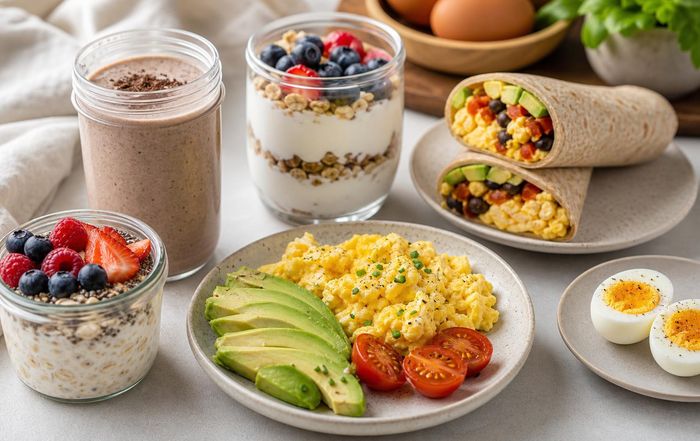
Overnight oats have become a weekday staple in many households because they require about five minutes of effort the night before and zero cooking in the morning. Rolled oats on their own provide modest protein (around 5 grams per half cup dry), but with a few additions, the bowl can easily reach 20-30 grams.
A basic structure is simple: combine rolled oats with a protein-rich liquid such as Greek yogurt, skyr, or fortified soy milk, then add extras like chia seeds, nut butter, or a scoop of protein powder. The Academy of Nutrition and Dietetics and organizations such as EatRight note that dairy and fortified soy products are among the more complete plant-based proteins, providing all essential amino acids. For those avoiding dairy, unsweetened soy or pea-protein milks tend to have significantly more protein than almond or oat milks, which are often quite low unless specifically fortified.
To keep this breakfast aligned with broader wellness goals, focus on limiting added sugars and relying on whole-food toppings like berries, sliced banana, grated apple, or a sprinkle of cinnamon. A spoonful of peanut, almond, or tahini adds both protein and healthy fats, which can further enhance satiety. If you are tracking overall nutrition as part of a spa-inspired self-care reset, pairing this kind of breakfast with nutrient-dense snacks and balanced meals throughout the day can create a consistent foundation, which we explore more in our food and nutrition section.
Greek Yogurt, Skyr, and High-Protein Dairy Bowls
Thick fermented dairy products such as Greek yogurt and Icelandic skyr are naturally high in protein and require almost no preparation, making them ideal for mornings when even overnight oats feel like too much planning. A single serving of plain Greek yogurt can provide 15-20 grams of protein, and many skyr brands offer similar amounts. Health authorities like NHS in the UK and Health Canada generally encourage choosing unsweetened or low-sugar varieties and adding your own fruit or small amounts of honey or maple syrup.
To turn a basic yogurt cup into a satisfying meal, add a handful of nuts or seeds, some chopped fruit, and possibly a spoonful of high-fiber cereal or granola. Be mindful that many commercial granolas are high in added sugars; choosing low-sugar or homemade options helps keep the focus on protein and fiber rather than quick-burning carbohydrates. For extra protein, stir in a tablespoon of powdered peanut butter, collagen, or a small scoop of neutral-flavored protein powder.
Those following spa-style or wellness-oriented eating patterns often want to support gut health as well. Fermented dairy and plant-based yogurts with live active cultures may contribute beneficial bacteria, though the science is still evolving and varies by product. Reputable sources like Harvard Health Publishing and Johns Hopkins Medicine emphasize that yogurt can be part of a gut-friendly pattern alongside high-fiber vegetables, fruits, and whole grains, rather than a cure-all on its own.
Fast Egg-Based Breakfasts: From Scrambles to Muffin Tins
Eggs remain one of the most convenient and widely available high-protein foods, with about 6-7 grams of protein per large egg plus a range of vitamins and minerals. Nutrition organizations, including the American Heart Association, have updated their guidance in recent years to reflect evidence that moderate egg consumption can fit into a heart-healthy diet for most people, though individuals with specific cholesterol or cardiovascular conditions should follow personal medical advice from their clinicians. For many healthy adults, an egg-based breakfast can be both practical and nutrient-dense.
For truly busy mornings, the key is minimal cooking or reheating. One approach is to prepare a batch of egg "muffins" or mini frittatas in a muffin tin on the weekend, using eggs or a mix of eggs and egg whites plus chopped vegetables, herbs, and perhaps a little cheese. Once baked and cooled, they can be stored in the refrigerator for several days and quickly reheated in a microwave or eaten cold. Pairing two or three of these with a slice of whole-grain toast or a piece of fruit yields a breakfast that is both portable and filling.
If you prefer cooking fresh in the morning, a simple scramble with eggs, pre-washed spinach or kale, and leftover vegetables can be prepared in under 10 minutes, particularly if you keep a non-stick pan and spatula easily accessible. For those exploring more plant-forward or sustainable choices, tofu scrambles seasoned with turmeric, black salt (kala namak), and vegetables can mimic the texture and protein content of scrambled eggs while aligning with vegetarian and vegan patterns, a topic that overlaps with our sustainable and international coverage as plant-based diets gain popularity globally.
High-Protein Smoothies You Can Drink on the Go
Smoothies are often marketed as a health food, but many commercial versions are heavy on fruit juice and sweeteners and relatively low in protein. For a busy morning, the goal is a balanced blend that can be sipped during a commute or while getting ready, without causing a sugar crash an hour later. Nutrition experts at institutions like Stanford Health Care and Mount Sinai frequently recommend building smoothies around a solid protein base, such as Greek yogurt, cottage cheese, tofu, or a high-quality protein powder, and then adding fruits, vegetables, and healthy fats.
A simple template is to combine a protein source, a fiber-rich carbohydrate, and a healthy fat. For example, blend unsweetened soy milk, a scoop of whey or pea protein, frozen berries, spinach, and a spoonful of almond butter. This combination can easily reach 20-30 grams of protein while also delivering fiber and micronutrients. Freezing fruit and greens in advance in individual smoothie bags can cut down morning prep to just dumping contents into a blender with liquid and blending.
Those concerned with environmental impact or animal welfare may prefer plant-based proteins like pea, soy, or hemp powders, which provide substantial protein without dairy. Organizations such as the Environmental Working Group and various sustainability researchers have examined the relative carbon footprints of different protein sources, though precise figures vary by production method and region. Choosing minimally processed, unsweetened powders and pairing them with whole fruits and vegetables keeps smoothies closer to a whole-food pattern, which fits well with spa-inspired wellness approaches that emphasize feeling energized rather than restricted.
Grab-and-Go Options: Bars, Shakes, and Convenience Foods
There are mornings when even blending a smoothie or scrambling eggs feels unrealistic, especially for parents, shift workers, and frequent travelers. In those situations, packaged high-protein options can be a useful bridge, provided they are chosen thoughtfully. Ready-to-drink protein shakes, yogurts in portable pouches, cottage cheese cups, and protein bars can all contribute to a higher-protein breakfast when combined with a piece of fruit or a handful of nuts.
Health organizations like Heart UK and Dietitians of Canada generally advise reading labels carefully, paying attention not only to protein grams but also to added sugars, saturated fat, and sodium. A bar or shake with 15-20 grams of protein and modest sugar can be a helpful tool; one with similar protein but high levels of added sugars and artificial additives may be less aligned with long-term wellness goals. When possible, pairing a convenience item with something fresh-such as an apple, carrot sticks, or cherry tomatoes-can add fiber and micronutrients with almost no extra time.
For readers interested in beauty and spa outcomes like skin health and hair strength, it can be tempting to rely on heavily marketed "beauty bars" or collagen drinks. While collagen contributes protein, organizations like NIH and independent dermatology experts note that evidence for specific beauty benefits is still emerging and often product-specific. A generally protein-adequate, nutrient-dense diet, good hydration, sun protection, and stress management remain foundational, as explored in our dedicated beauty and women sections.
Culturally Diverse Protein-Rich Breakfast Ideas
High-protein breakfasts do not have to look like Western cereal and eggs. Many traditional morning meals around the world are naturally rich in protein and can be adapted for modern, time-pressed lifestyles. Exploring these options can make breakfast more interesting and inclusive while still supporting fitness, weight management, or general wellness goals.
For instance, Japanese-inspired breakfasts might include grilled fish, miso soup with tofu, and rice, offering a mix of protein from fish and soy. Mediterranean-style mornings might feature hummus with whole-grain bread, olives, and vegetables, leveraging chickpeas and sesame as protein sources. In parts of India, dishes like idli with sambar or besan (chickpea flour) chilla provide plant-based protein, especially when paired with yogurt. While some of these meals traditionally involve more preparation, elements can be simplified: pre-made hummus, leftover grilled fish, or pre-cooked lentil stews can be portioned in advance and quickly reheated.
Global health organizations such as the Food and Agriculture Organization and World Cancer Research Fund often highlight diverse, plant-forward dietary patterns as beneficial for long-term health. Incorporating beans, lentils, tofu, tempeh, and nuts into breakfast can help increase overall plant protein intake, reduce reliance on processed meats, and introduce a wider array of micronutrients and phytochemicals. For travelers or those living abroad, exploring local high-protein breakfast traditions can also be a way to connect with culture while maintaining personal wellness routines, a theme we frequently explore in our travel coverage.
Balancing Protein with Overall Wellness
While it is tempting to focus solely on protein grams, a breakfast that supports overall wellbeing also considers fiber, healthy fats, hydration, and practicality. Fiber from fruits, vegetables, and whole grains can help regulate digestion and support gut health, while unsaturated fats from nuts, seeds, avocados, and olive oil contribute to heart health and sustained energy. Medical and public-health organizations, from American Heart Association to European Food Safety Authority, consistently emphasize the importance of overall dietary patterns rather than single nutrients.
For readers integrating these breakfast ideas into broader lifestyle changes-perhaps alongside a new exercise program, yoga practice, or stress-reduction routine-it can be helpful to view high-protein breakfasts as one supportive pillar rather than a cure-all. Consistency often matters more than perfection. Preparing a few core ingredients on a calmer day-such as hard-boiled eggs, washed salad greens, chopped vegetables, or a batch of overnight oats-can reduce decision fatigue and make it easier to choose nourishing options even on hectic mornings.
Finally, individual needs vary. Athletes, pregnant or breastfeeding people, older adults, and those recovering from illness or surgery may require higher protein intakes, while individuals with kidney disease or certain metabolic conditions may need to moderate or carefully manage protein under medical supervision. Consulting a registered dietitian or qualified healthcare professional can help tailor these general ideas to personal health circumstances, which is especially important for readers with chronic conditions, specific fitness goals, or complex medication regimens.
Turning Quick Breakfasts into a Restorative Ritual
High-protein breakfasts for busy mornings are ultimately about more than macronutrients; they are an opportunity to create a small daily ritual of care before the day accelerates. Whether that means sipping a protein-rich smoothie while stretching, enjoying a bowl of yogurt and fruit in natural light, or simply knowing there is a prepared egg muffin or tofu scramble waiting in the fridge, these routines can reduce stress and support a sense of groundedness.
By pairing practical nutrition strategies with simple self-care-like a brief breathing exercise, a few yoga poses, or a moment of gratitude-mornings can shift from chaotic to intentional without requiring large blocks of time. For readers looking to build a more complete routine, our sections on spa and salon, wellness, and lifestyle offer additional ideas for creating quick, restorative rituals that fit into real-world schedules. Over time, these small choices can add up to a day that feels steadier, more energized, and more aligned with the way you want to live.
