
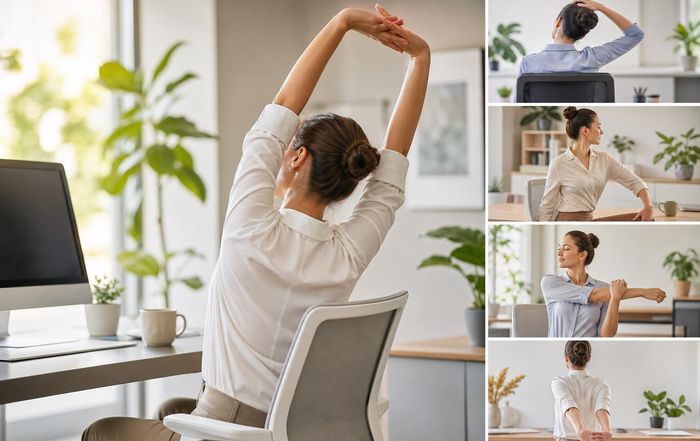
Desk Stretches to Reduce Stiffness During the Workday
Hours at a desk can leave the body feeling surprisingly tired: tight hips, aching neck, stiff shoulders, and tense lower back. Prolonged sitting is linked with muscle imbalances, reduced circulation, and increased discomfort, even for people who exercise regularly outside work. Simple desk stretches, done consistently, can ease stiffness, support long-term joint health, and offer a brief mental reset in the middle of a busy day. This guide focuses on practical, evidence-informed stretches you can do in office clothes, with minimal space and no special equipment. It also explains how often to move, what to watch for if you have pain or medical conditions, and how to turn quick stretches into a sustainable wellness habit.
Why Desk Stretches Matter for Your Body and Mind
Modern research on sedentary behavior shows that long periods of sitting are associated with increased risk of musculoskeletal pain, reduced metabolic health, and lower overall well-being. Organizations such as the World Health Organization highlight physical inactivity as a major global health concern, recommending regular movement breaks throughout the day rather than relying only on a single workout session at either end of the workday. Guidance from bodies such as the American College of Sports Medicine and UK National Health Service similarly emphasizes breaking up sitting time with light movement.
When you sit for hours, certain muscles stay shortened (such as hip flexors and chest muscles), while others become lengthened and underused (like the upper back and gluteal muscles). Over time, this can contribute to rounded shoulders, forward head posture, and lower-back strain. Gentle stretching, paired with short bouts of walking, helps restore blood flow, lubricate joints, and reduce the feeling of stiffness. It can also improve body awareness, so you notice slouching or tension earlier and correct it before pain builds.
Beyond the physical benefits, brief stretching breaks can function like micro-meditations. They interrupt cognitive overload, reduce perceived stress, and may improve focus when you return to your tasks. For people interested in overall wellness and stress management, these small resets can be as important as longer workouts or spa days. While stretching alone cannot counter all the risks of prolonged sitting, it is a simple, low-barrier step that fits easily into most work environments, whether at home or in an office.
How Often Should You Stretch at Your Desk?
There is no single perfect formula, but many occupational health experts recommend standing or moving at least briefly every 30-60 minutes. Research on "active breaks" suggests that a few minutes of light movement each hour can improve comfort and may help with blood sugar and circulation compared with uninterrupted sitting. Institutions such as the U.S. Centers for Disease Control and Prevention and National Institute for Occupational Safety and Health encourage regular movement as part of healthy workplace design, even if formal exercise guidelines are met.
For most office workers, a realistic pattern is a 1-3 minute stretch break every hour, plus a slightly longer 5-10 minute break mid-morning and mid-afternoon. During shorter breaks, focus on one or two key areas that feel tight, such as the neck and shoulders after video calls, or hips and lower back after long writing sessions. During longer breaks, combine stretches with a quick walk to the restroom, water cooler, or kitchen to add more steps and circulation.
If you struggle to remember, consider using calendar reminders, a pomodoro-style timer, or wearable-device alerts. Some people find it helpful to "stack" stretches onto existing habits: for example, stretching every time you send a major email, complete a meeting, or refill your water. Integrating movement into your workday lifestyle is more sustainable than relying on willpower alone. The key is consistency: modest, frequent stretching generally beats an occasional long session when it comes to easing desk-related stiffness.
Simple Neck and Shoulder Stretches for Screen Relief
Neck and shoulder tension is one of the most common complaints among desk workers, especially with laptops and multiple screens. Forward-head posture increases load on the neck muscles, while shrugged shoulders and static mouse use tighten the upper trapezius and chest. Gentle stretches can reduce discomfort and may help prevent tension headaches, though they should not be painful or forced.
A basic seated neck stretch can be done in almost any office setting. Sit tall on your chair, feet flat. Gently tilt your right ear toward your right shoulder, keeping the shoulders relaxed and down. You may already feel a stretch on the left side of your neck. For a little more intensity, place your right hand lightly on the left side of your head and add very gentle pressure-never pulling or yanking. Hold for 15-30 seconds while breathing slowly, then repeat on the other side. Next, you can look diagonally down toward your armpit to target the muscles at the back of the neck, again holding for 15-30 seconds each side.
For the shoulders and chest, a seated or standing shoulder-roll sequence helps release tension. Sit or stand tall, then roll your shoulders up toward your ears, back, and down in a smooth circle 10 times, followed by 10 circles forward. After that, interlace your fingers behind your back (or hold a towel if your hands do not meet comfortably), straighten your arms as much as feels comfortable, and gently lift your hands away from your body while opening your chest. This counters the rounded posture of keyboard work. People who spend long hours on screens may also benefit from brief strengthening exercises such as scapular retractions, which are often recommended by physiotherapists and organizations such as Mayo Clinic and Cleveland Clinic, but even simple stretches can noticeably ease stiffness when performed regularly.
Wrist, Hand, and Forearm Stretches for Typing Fatigue
Continuous typing and mouse use can leave the wrists, hands, and forearms feeling tight or achy, and in some cases may contribute to repetitive strain problems. Ergonomic bodies such as OSHA in the United States and the Health and Safety Executive in the UK emphasize both workstation setup and movement breaks to reduce discomfort. While stretches are not a cure-all for conditions like carpal tunnel syndrome, many people find them helpful for day-to-day relief.
A straightforward wrist flexor stretch starts with extending one arm in front of you at shoulder height, palm facing up. With the other hand, gently pull the fingers down and back toward the floor until you feel a stretch along the underside of the forearm. Keep the shoulder relaxed and avoid locking the elbow. Hold for 15-20 seconds, then switch sides. To stretch the wrist extensors, rotate the palm down and gently press the back of the hand toward your body with the opposite hand, feeling the stretch along the top of the forearm. Again, hold and breathe steadily.
For the fingers and palms, interlace your fingers, turn your palms outward, and reach forward as if you are trying to push something away, creating length through the hands and upper back. Then release, spread the fingers wide, make a gentle fist, and repeat several times to encourage blood flow. Shaking out the hands lightly at your sides can also help. If you regularly experience tingling, numbness, or sharp pain, especially at night, it is worth discussing symptoms with a healthcare professional such as a physiotherapist or occupational health specialist, who may recommend specific nerve-gliding exercises or ergonomic changes in addition to stretches.
Upper-Back and Chest Openers to Counter Hunching
Hours spent leaning toward a screen or phone often lead to a rounded upper back and tight chest muscles. Over time, this posture can contribute to discomfort between the shoulder blades, reduced shoulder mobility, and shallow breathing. Desk-friendly upper-back and chest stretches can help reverse some of this hunching and support a more open, relaxed posture, complementing broader fitness and strength routines.
One accessible option is a seated thoracic extension using your chair. Sit toward the front of a chair with a low or mid-height back (this is harder with high-back executive chairs). Place your hands lightly behind your head, elbows wide. Lean your upper back over the top of the chair back, gently lifting your chest toward the ceiling while keeping your lower ribs relatively controlled. You should feel a mild stretch across the chest and a gentle extension through the upper spine. Move in and out of this position slowly 5-8 times, breathing comfortably.
Another effective stretch is a doorway or wall chest opener, often recommended in physical therapy and rehab settings. Stand in a doorway with your forearms on the doorframe, elbows at roughly shoulder height and bent to 90 degrees. Step one foot forward and lean your chest gently through the doorway until you feel a stretch across the front of the shoulders and chest. Hold for 20-30 seconds, keeping the neck long and shoulders away from the ears. If you work from home or in a more casual office, you can also perform a standing "Y" stretch: stand tall, reach your arms overhead in a wide Y, rotate the palms forward, and gently squeeze the shoulder blades down and back. This promotes a more open, upright posture and can serve as a quick reset between tasks or meetings.
Lower-Back and Hip Stretches You Can Do Near Your Desk
Lower-back and hip stiffness are classic complaints among people who sit much of the day. When hips remain flexed for long periods, the muscles at the front (hip flexors) can tighten, while the glutes and deep stabilizing muscles may become underused. Organizations such as Harvard Health Publishing and Johns Hopkins Medicine note that movement, stretching, and core strength all play roles in managing and preventing many types of nonspecific lower-back pain. While anyone with significant or radiating pain should seek professional assessment, basic desk-friendly stretches are safe for many people.
A seated figure-four stretch is one of the most practical hip openers at a workstation. Sit tall near the front of your chair with both feet flat. Cross your right ankle over your left thigh, just above the knee, letting the right knee drop out to the side. You may already feel a stretch in the outer hip and glute. To deepen it, hinge forward from the hips while keeping your back relatively straight, moving only as far as is comfortable. Hold for 20-30 seconds, breathing slowly, then switch sides. This can ease tension that contributes to lower-back discomfort, especially after long meetings.
For the lower back, a simple seated spinal twist can be helpful when done gently. Sit upright with feet grounded. Place your right hand on the back of the chair and your left hand on your right thigh. Inhale to lengthen your spine, then exhale as you slowly rotate your torso to the right, looking over your shoulder without forcing the neck. Hold for a few breaths, then return to center and repeat on the other side. If twisting bothers your back or you have a history of spinal issues, keep the movement small or skip this stretch. When you have a bit more space, a standing hip-flexor stretch-stepping one foot back into a short lunge and gently tucking the pelvis-can also help counter prolonged sitting.
Leg, Ankle, and Foot Stretches to Keep Circulation Flowing
Sitting for long periods can reduce circulation to the legs and feet, contribute to stiffness, and in some individuals may increase the risk of venous problems. Public-health organizations, including WHO and national cardiovascular charities such as the American Heart Association, encourage regular movement, particularly for people with additional risk factors such as smoking, obesity, or a history of clotting disorders. While stretching is not a substitute for medical management, small movements at your desk can support comfort and blood flow.
An easy starting point is to regularly perform ankle circles and pumps while seated. Sit tall, hold the chair for balance if needed, and extend one leg slightly in front of you with the heel on the floor. Point and flex the toes 10-15 times, then make slow circles in each direction. Repeat with the other leg. This helps move blood through the lower legs and reduces that "heavy" feeling after long sitting. If your workplace allows, occasionally slip off shoes to wiggle and spread the toes, especially if you wear tight or high-heeled footwear.
For the backs of the legs, a seated hamstring stretch can be done discreetly. Sit near the edge of your chair, extend one leg forward with the heel on the floor and toes pointing up, and gently hinge forward at the hips while keeping your back neutral. You should feel a stretch along the back of the thigh. Hold for 15-20 seconds, then switch sides. Standing calf stretches using a wall-stepping one leg back and pressing the heel toward the floor-are also useful during slightly longer breaks. Combining these with a short walk to refill water or step outside can further support circulation and overall health.
Mini Mobility Routine: A 3-5 Minute Desk Break
For people who prefer structure, it can help to have a simple, repeatable sequence you can do without thinking too much about which stretch comes next. A brief mobility routine might include a few moves from each major area-neck, shoulders, back, hips, and wrists-taking just a few minutes. This can be done between meetings, after finishing a focused work block, or whenever you notice stiffness building.
One example routine: start seated with 5-6 slow neck tilts and gentle rotations, followed by 10 shoulder rolls in each direction. Then perform a seated thoracic extension over the back of your chair, moving in and out of the stretch several times. Next, do a seated figure-four hip stretch on each side, holding for 20-30 seconds. Finish with a wrist flexor and extensor stretch on both sides and a round of ankle pumps and circles. You can adjust the order and duration based on what feels most helpful on a given day. Over time, this kind of routine can become as automatic as checking your email, forming part of a broader wellness and spa-inspired self-care approach to your workday.
If you enjoy integrating breathwork, consider pairing each stretch with slow, diaphragmatic breathing-inhale through the nose for about four counts, exhale through the mouth for six. This can enhance the relaxation response and may lower perceived stress. For those who practice yoga, familiar concepts like mindful movement and body scanning can easily be woven into these brief desk sessions, turning them into mini moving meditations rather than purely physical exercises.
Making Desk Stretches a Sustainable Habit
The biggest challenge with any workplace wellness habit is not knowing what to do, but actually doing it consistently. Behavior-change research, including work popularized by institutions such as Stanford University and health-promotion programs from organizations like Kaiser Permanente, highlights the value of making new habits small, convenient, and tied to existing routines. Desk stretches fit this model well if approached thoughtfully.
Start by choosing just two or three stretches that address your main discomforts-perhaps a neck tilt, shoulder roll, and seated hip stretch-rather than trying to adopt a long list all at once. Attach them to a trigger you already experience many times a day, such as finishing a call, sending an important email, or returning from the restroom. Keep the bar low: even 60-90 seconds of movement is beneficial. Over time, you can expand or vary your routine, adding in more upper-back, wrist, or leg stretches as needed.
It also helps to view stretching as part of a broader lifestyle approach that may include regular exercise, adequate sleep, hydration, and mindful breaks. Exploring topics like food and nutrition, stress management, and women's health and workplace well-being can provide additional support, especially for those balancing demanding professional and personal roles. If your workplace has a wellness program, consider suggesting short stretch breaks during long meetings or sharing simple routines with colleagues; collective participation can normalize movement and reduce any self-consciousness about standing up to stretch.
Safety, Modifications, and When to Seek Professional Help
While most gentle desk stretches are safe for healthy adults, there are important caveats. If you have a history of musculoskeletal injuries, spinal problems, joint replacements, or conditions such as osteoporosis, inflammatory arthritis, or neurological disorders, it is wise to consult a healthcare professional-such as a physician, physiotherapist, or occupational therapist-before starting new routines. Reputable organizations like Physiopedia, Chartered Society of Physiotherapy, and national orthopedic associations provide general guidance, but individual assessment is often needed for complex cases.
When stretching, aim for a mild to moderate pulling or lengthening sensation, never sharp pain, numbness, or tingling. Move slowly into each position and avoid bouncing. If a particular stretch consistently causes discomfort beyond mild tightness, stop and either modify the range of motion or skip that movement entirely. People with high or unstable blood pressure, glaucoma, or certain cardiovascular conditions may need to avoid positions that involve prolonged breath-holding or significant strain; breathing steadily throughout each stretch is a good general rule.
Ergonomics also matter. Even the best stretching routine cannot fully compensate for a poorly set-up workstation. Resources from agencies such as NIOSH, OSHA, and national health services offer checklists on chair height, screen position, keyboard placement, and lighting. Combining ergonomic improvements with regular movement and stretching is more effective than relying on any one strategy alone. If symptoms such as persistent pain, weakness, or radiating sensations into the arms or legs develop, seek professional evaluation rather than trying to "stretch it out."
Desk stretches are not a replacement for comprehensive exercise or medical care, but they are a realistic, low-effort way to reduce stiffness, refresh your mind, and bring a little spa-like care into an ordinary workday. With a few simple movements, done regularly, the work desk can become a place not just of productivity, but of small, meaningful moments of restoration.
