
How to Protect Your Sleep Routine While Traveling
Changing time zones, sleeping in unfamiliar beds, and navigating packed itineraries can quickly unravel even the most solid sleep routine. Yet quality rest is one of the most powerful tools for enjoying travel, supporting immunity, and keeping mood and energy steady. For spa and wellness-minded travelers, protecting sleep is as essential as choosing a good hotel or finding a relaxing massage. This travellers guide brings together current sleep science and practical travel strategies to help maintain a calm, restorative sleep pattern-whether you are crossing nine time zones or just heading to a nearby city for a work trip.
Why Travel Disrupts Sleep So Easily
Travel challenges sleep on several fronts at once. Jet lag is the most obvious: when crossing time zones, the body's internal clock (circadian rhythm) remains aligned with home while the local day-night cycle has shifted. According to the National Sleep Foundation, this internal clock influences hormone release, body temperature, digestion, and alertness, all of which affect how easily a person falls asleep and wakes up in a new location. Even without time zone changes, disrupted routines, late-night meals, alcohol, and increased screen time can interfere with the production of melatonin, the hormone that signals the body it is time to sleep. Environmental changes add another layer: different mattresses, pillows, noise, light, and room temperature can all make falling and staying asleep more difficult, particularly for light sleepers or people with underlying anxiety. For wellness-focused travelers, acknowledging these pressures is the first step to designing a trip that supports, rather than sabotages, rest.
Stress and excitement also play a role. Business travelers may face performance pressure, early meetings, and irregular schedules, while leisure travelers often push themselves to "do it all," packing days with sightseeing, late dinners, and socializing. Research summarized by the American Academy of Sleep Medicine suggests that even a few nights of short sleep can impair cognitive function, emotional regulation, and immune response, which can make travelers more vulnerable to infections and mood swings. For those interested in broader health and wellness, protecting sleep becomes a foundational habit that supports everything else-from enjoying local food to maintaining fitness and skin health on the road.
Prepare Your Sleep Routine Before You Leave
Preparation in the week before departure can significantly reduce sleep disruption, especially for long-haul trips. Sleep specialists often recommend gradually shifting bedtime and wake time toward the destination's schedule. For eastbound travel, going to bed and waking up 30-60 minutes earlier each day for several days can help; for westbound, shifting later may be more appropriate. Guidance from Harvard Medical School's Division of Sleep Medicine emphasizes that even modest adjustments can make jet lag milder because the circadian clock has already begun to move in the right direction. Travelers with rigid work schedules may not achieve a full shift, but small changes still help the body adapt more quickly upon arrival.
Maintaining good sleep hygiene before a trip is equally important. That includes limiting caffeine and alcohol late in the day, reducing blue-light exposure from phones and laptops in the hour before bed, and creating a consistent wind-down routine. For readers who already practice at-home self-care-such as evening skincare, light stretching, or a brief meditation-keeping these rituals consistent reinforces the brain's association between those activities and sleep. Those interested in a broader bedtime self-care ritual can find complementary ideas in spa and salon-inspired routines, which often translate well to hotel environments. Finally, avoid starting a trip already sleep-deprived: catching up on rest before departure makes it easier to cope with the inevitable disruptions of travel days.
Managing Jet Lag Across Time Zones
Jet lag is essentially a mismatch between internal time and local time. The Centers for Disease Control and Prevention (CDC) notes that the body's clock naturally shifts by only about one to two hours per day, so large time zone jumps may take several days to fully adjust. Eastbound travel (for example, New York to Europe) tends to be harder than westbound because it requires falling asleep earlier than the body expects. To help reset the clock, travelers can use light exposure, meal timing, and careful napping.
Light is the most powerful cue for the circadian system. Exposure to bright natural light in the morning at the destination can help advance the clock for eastbound travel, while afternoon and early evening light can help delay the clock for westbound trips. Resources from The Sleep Foundation and Mayo Clinic explain that avoiding bright light at the wrong time-such as early morning light after flying west-can prevent the clock from shifting in the opposite direction. Practical strategies include seeking morning sunlight through a walk or outdoor breakfast and using sunglasses or staying indoors when light exposure would push the clock the wrong way. For travelers who want to combine wellness and movement, a gentle morning walk or jog also supports fitness while reinforcing the new schedule.
Meal timing also influences circadian rhythms, particularly those related to digestion and metabolism. Eating meals according to local time as soon as practical-light breakfast in the morning, main meal in the early to mid-evening-helps the body understand when "daytime" is supposed to be. Heavy meals close to bedtime can worsen heartburn and fragment sleep, especially after long flights. Some frequent travelers follow fasting or time-restricted eating protocols around flights; while research is still emerging, early studies discussed by institutions such as Harvard T.H. Chan School of Public Health suggest that moderate, well-timed fasting may help shift internal clocks in some people. Anyone with medical conditions or on medication should consult a clinician before experimenting with fasting, especially during demanding travel.
Should You Use Melatonin or Sleep Aids?
Melatonin supplements are widely used to manage jet lag, but their effectiveness and safety depend on timing, dosage, and individual health. The National Institutes of Health (NIH) notes that low-dose melatonin (often 0.5-3 mg) taken close to the destination's bedtime can modestly reduce jet lag symptoms for many travelers, particularly when combined with appropriate light exposure. Higher doses are not necessarily more effective and may increase the risk of grogginess or vivid dreams. In many countries, melatonin is available over the counter, but in others it is regulated as a prescription drug, so travelers should check local rules and speak with a healthcare provider before using it, especially children, pregnant people, and those on other medications.
Prescription sleep medications and sedating antihistamines can help some travelers sleep on overnight flights or during the first nights in a new time zone, but they come with important caveats. Organizations such as the American Academy of Sleep Medicine and Mayo Clinic caution that these drugs can cause residual drowsiness, confusion, and impaired coordination the following day, which can be particularly risky when driving or navigating unfamiliar places. They may also mask, rather than resolve, circadian misalignment. For many wellness-oriented travelers, non-pharmacological strategies-such as relaxation techniques, breathwork, or gentle yoga stretches-offer a safer first-line approach. Herbal teas containing chamomile, lemon balm, or passionflower, sourced from reputable brands, can also be soothing, though evidence is more limited and they should not be combined with sedatives without medical advice.
Crafting a Sleep-Friendly Flight Routine
Flights, especially overnight ones, can either ease the transition to a new time zone or make it significantly harder. A helpful rule of thumb is to align in-flight behavior with the destination's schedule as early as practical. If landing in the morning, try to sleep during the latter part of the flight; if arriving in the evening, staying awake on board may make it easier to fall asleep after checking into the hotel. Airlines increasingly provide guidance about local time on their entertainment systems, but travelers can also set their watches or phones to destination time at boarding to cue the brain.
Comfort and environment matter even more in the confined space of an aircraft. Simple tools-a quality neck pillow, eye mask, and noise-canceling headphones or earplugs-can dramatically improve the chance of getting restorative rest. Hydration is critical, as cabin air is very dry; sipping water regularly and avoiding excessive alcohol or caffeine helps reduce headaches and grogginess. Guidance from the International Air Transport Association (IATA) and various aviation health groups also highlights the importance of moving around periodically to support circulation, especially on long-haul flights. Light stretching in the aisle, ankle circles while seated, and gentle shoulder rolls can keep the body from stiffening, which in turn makes it easier to relax into sleep later.
Travelers who already embrace spa-style self-care can adapt elements of their at-home routine to the plane. A brief breathing exercise-such as inhaling for a count of four, exhaling for a count of six-can lower heart rate and encourage relaxation. A tiny roll-on of lavender or chamomile essential oil (used considerately so as not to overwhelm nearby passengers) can become a portable anchor for sleep, echoing the kind of sensory cues used in many spa and salon environments. Keeping screens dim and using blue-light filters during the hours designated for "night" on the plane further supports melatonin production and reduces eye strain.
Turning Any Hotel Room into a Sleep Sanctuary
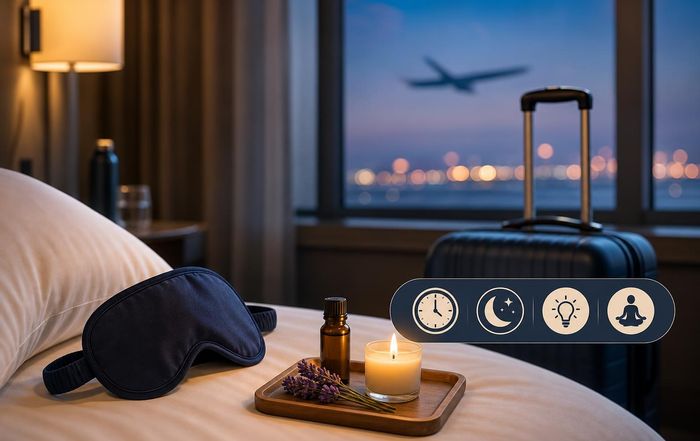
Once on the ground, the sleeping environment often becomes the biggest determinant of whether a traveler can maintain their routine. Hotel rooms vary widely in terms of noise, light, temperature, and bedding quality, but a few adjustments can make almost any space more sleep-friendly. Sleep experts, including those at the National Sleep Foundation, generally recommend a cool room (around 18-20°C or 65-68°F) for optimal sleep. Many hotels default to warmer temperatures, so adjusting the thermostat or requesting extra blankets instead of higher heat can help. If the room lacks blackout curtains or lets in light around the edges, portable solutions such as a travel eye mask or even using hangers with clips to pinch curtains together can significantly darken the space.
Noise is another common obstacle. Urban hotels may be exposed to traffic, nightlife, or elevator sounds, while resort properties can be unexpectedly loud due to entertainment venues or neighboring rooms. Earplugs and white-noise apps are simple tools; some travelers also use small portable sound machines. For those particularly sensitive to sound, requesting a room away from elevators, ice machines, and bars when booking can preempt many issues. Bringing familiar elements from home-such as a pillowcase, lightweight blanket, or even a travel-sized scented pillow spray-can further cue the brain that it is time to sleep, echoing the soothing environment many people seek in wellness retreats and spas.
Evening rituals are especially important in unfamiliar settings. A short warm shower, gentle stretching, or a simple skincare routine can create a sense of continuity with home. Dim the room's lights at least 30-60 minutes before sleep to encourage natural melatonin release, using bedside lamps instead of overhead lights. Limiting work in bed is crucial; using the bed only for sleep and intimacy helps maintain a strong mental association between bed and rest. For those combining travel with demanding careers, it may be tempting to reply to emails from under the duvet, but moving work to a desk or lobby area can protect the quality of later sleep.
Balancing Itineraries, Social Life, and Rest
One of the biggest practical challenges is balancing the desire to explore or network with the need to protect sleep. Many travelers-especially on short leisure trips-feel pressure to maximize every waking hour, leading to late nights, early mornings, and little downtime. Yet research referenced by organizations such as the World Health Organization (WHO) and National Institutes of Health (NIH) links chronic short sleep with higher stress, reduced cognitive performance, and weakened immunity, outcomes that can undermine both business and holiday goals. A more sustainable strategy is to prioritize a few key experiences or meetings each day and allow flexible time around them rather than building back-to-back schedules.
Alcohol and late, heavy meals often accompany socializing and local culinary exploration. While a drink with dinner may not harm sleep for most people, larger quantities-particularly close to bedtime-disrupt sleep architecture, reducing restorative REM sleep and increasing nighttime awakenings. Similarly, large or spicy meals late at night can provoke indigestion and reflux, especially when lying down soon after eating. For readers interested in food and nutrition, choosing lighter evening meals, staying hydrated, and spacing dinner at least two to three hours before bedtime can support both digestion and sleep quality. When late-night social events are unavoidable, planning a quieter following morning or a brief afternoon rest the next day can help prevent accumulating a major sleep deficit.
Movement, Mind-Body Practices, and Daytime Habits
Daytime behaviors strongly influence nighttime rest. Regular physical activity improves sleep quality, mood, and energy, but the timing and intensity matter. Vigorous exercise very close to bedtime can be overstimulating for some people, while morning or afternoon movement tends to support circadian alignment and stress reduction. Travelers who enjoy fitness can use hotel gyms, local parks, or even stairwells for short, functional workouts that keep the body engaged without exhausting it. This is particularly relevant for readers integrating fitness habits into their travel lifestyle.
Mind-body practices such as yoga, tai chi, and mindfulness meditation have been shown in studies highlighted by institutions like Cleveland Clinic and Harvard Medical School to improve sleep onset and perceived sleep quality, partly by reducing sympathetic nervous system activity (the "fight or flight" response). Even a brief 10-15 minute routine-gentle yoga poses, body scan meditation, or guided breathing-performed in the hotel room can become a powerful anchor for the sleep routine. Many travelers also find benefits from spa-inspired techniques such as progressive muscle relaxation: systematically tensing and releasing muscle groups from the feet up to the face. These practices dovetail naturally with the broader wellness and lifestyle interests of readers seeking a restorative travel experience.
Caffeine use deserves special attention. Coffee and tea can be valuable tools against jet lag and early meetings, but they linger in the body for hours. Sleep organizations commonly recommend avoiding caffeine within six hours of bedtime; sensitive individuals may need a longer buffer. Switching to water or herbal tea in the afternoon, particularly on the first days in a new time zone, can make it easier to fall asleep at the intended local time. Balancing stimulation and relaxation throughout the day allows the nervous system to downshift more smoothly as night approaches.
Special Considerations: Business Trips, Short Stays, and Families
Different types of trips call for slightly different strategies. Business travelers often face tight schedules and limited control over meeting times and social obligations. For them, protecting even a core window of 6-7 hours of sleep, plus short strategic rest periods, can make a noticeable difference in performance. The American College of Occupational and Environmental Medicine and similar bodies have emphasized how sleep deprivation impairs decision-making and reaction time, which is especially relevant for those in safety-critical or high-stakes roles. Business travelers may benefit from setting clear boundaries where possible-declining very late dinners before early meetings, for example-and using brief relaxation practices to transition from work mode to sleep.
For short trips of two or three days, fully adjusting to the local time zone may not be practical. Some experts, including those referenced by The Sleep Foundation, suggest that in such cases it can be better to partially align with home time rather than forcing a complete shift. That might mean keeping bedtime and wake time closer to home schedule and planning activities accordingly, especially if the time difference is modest. On the return, the adjustment back is often easier because the body never fully adapted away from home time. This strategy is particularly useful for frequent international travelers who might otherwise feel perpetually jet-lagged.
Families traveling with children face their own sleep challenges. Children's circadian systems can be more sensitive, and overtired kids may become hyperactive rather than sleepy. Pediatric sleep guidance from organizations like the American Academy of Pediatrics stresses the importance of maintaining familiar bedtime routines-bath, story, song-even when away from home. Bringing favorite comfort items, such as a small blanket or soft toy, helps create continuity. Parents may want to build extra flexibility into itineraries to allow for earlier bedtimes or naps, recognizing that a well-rested child often makes the entire trip more enjoyable for everyone.
When to Seek Professional Advice
Most travel-related sleep problems are temporary and improve as the body adjusts. However, persistent or severe issues may warrant professional attention. People with existing sleep disorders-such as insomnia, sleep apnea, restless legs syndrome, or circadian rhythm disorders-should discuss travel plans with a healthcare provider or sleep specialist in advance. Organizations such as the American Academy of Sleep Medicine, NHS in the United Kingdom, and World Sleep Society provide directories and educational resources that can help patients understand how travel might interact with their condition and what adjustments are necessary. This may include timing of medications, use of CPAP equipment on flights, or specific strategies for shift workers who frequently cross time zones.
Red flags include ongoing extreme daytime sleepiness, loud snoring with gasping or pauses in breathing, or mood changes that persist long after returning home. In these cases, travel may have unmasked an underlying sleep disorder rather than simply causing jet lag. Addressing such conditions not only improves future travel but also supports long-term health, including cardiovascular and metabolic well-being. For jet setting readers committed to a holistic approach to health, viewing sleep care as part of preventive medicine rather than an afterthought can be a transformative shift.
Bringing Spa-Level Rest into Every Journey
Protecting a sleep routine while traveling is less about perfection and more about making a series of small, intentional choices. Gradually adjusting schedules before departure, aligning light exposure and meals with local time, using planes and hotel rooms thoughtfully, and weaving in calming mind-body practices all contribute to steadier energy and mood. These habits mirror the principles behind many spa and wellness experiences: creating environments and rituals that signal safety, relaxation, and recovery for both body and mind.
Travel can be demanding, but it can also be an opportunity to refine a personal rest ritual that works anywhere-whether in a luxury resort, a business hotel, or a small guesthouse. By treating sleep as a non-negotiable part of the journey rather than something to squeeze in around other plans, travelers not only feel better in the moment but also return home less depleted and more inspired for everyday lifestyle and wellness routines.
