
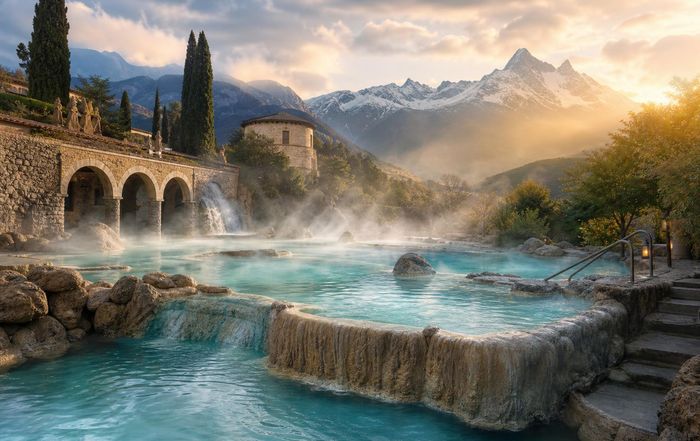
European Hot Springs You Must Visit! A Qikspa Guide to Thermal Wellness, Culture, and Luxury
The Renaissance of Thermal Wellness in Europe
European hot springs are experiencing a powerful renaissance, evolving from historic bathing traditions into sophisticated wellness destinations that align with contemporary expectations of health, sustainability, and experiential travel. For the fantastic, well travelled community audience visiting Qikspa, which lives at the intersection of spa culture, health, beauty, and lifestyle, the continent's thermal baths now represent far more than picturesque pools of warm water; they have become integrated wellness ecosystems where medical expertise, hospitality excellence, and cultural heritage converge in ways that speak directly to modern priorities around preventive health, mental resilience, and sustainable luxury.
As interest in evidence-based wellness has accelerated, organizations such as the World Health Organization have highlighted the growing importance of non-communicable disease prevention and stress management in overall health strategies, and discerning travelers are increasingly seeking destinations that support these goals in tangible ways. European hot springs, with their long history of therapeutic bathing, mineral-rich waters, and regulated medical balneology practices, are uniquely positioned to meet this demand. At the same time, digital-native wellness consumers are turning to curated premium websites like Qikspa to discover spa and salon experiences that blend tradition with innovation, whether they are planning a dedicated thermal retreat or integrating a hot spring visit into a broader travel or cultural itinerary.
The Science and Heritage Behind Europe's Thermal Waters
Europe's hot springs are not a passing trend; they are rooted in centuries of medical, cultural, and architectural history. From the Roman thermae to the grand 19th-century spa towns recognized by UNESCO as the "Great Spa Towns of Europe," these destinations have long been associated with healing, social connection, and status. Modern hydrogeology and balneology research, documented by institutions such as the European Spas Association, has provided a clearer understanding of how mineral content, water temperature, and bathing protocols can support musculoskeletal health, circulation, respiratory function, and stress reduction when integrated into structured wellness programs.
For readers who prioritize holistic health, these hot springs can be viewed as a natural extension of broader wellness practices that include nutrition and mindful eating, fitness and movement, and mental well-being. Many leading European spa towns collaborate closely with medical professionals, physiotherapists, and nutritionists, aligning their offerings with guidance from reputable resources such as Mayo Clinic and Cleveland Clinic, where visitors can learn more about conditions like arthritis, chronic pain, and stress-related disorders that may benefit from complementary hydrotherapy approaches. This fusion of tradition and evidence-based care has elevated European hot springs from leisure attractions to authoritative wellness destinations that resonate strongly with Qikspa's health-conscious folks.
Baden-Baden, Germany: The Classical Benchmark for Spa Excellence
Among Europe's most iconic spa destinations, Baden-Baden in Germany continues to set the benchmark for refined thermal wellness in 2026. Nestled at the edge of the Black Forest, this elegant town has attracted royalty, artists, and business leaders for over a century, and today it offers a compelling blend of historic bathhouses, contemporary wellness clinics, and high-end hospitality. The town's thermal waters, rich in sodium chloride and trace minerals, are channeled into both traditional Roman-Irish-style baths and modern spa complexes where guests can follow structured hydrotherapy circuits designed to optimize circulation, detoxification, and relaxation.
As global conversations around stress, burnout, and mental health intensify, resources such as Harvard Health Publishing have underscored the importance of restorative practices, mindful relaxation, and time away from digital overload. Baden-Baden's serene architecture, walkable town center, and carefully curated spa rituals respond directly to these needs, making it an ideal destination for executives, entrepreneurs, and professionals who frequent Qikspa's business and careers content and seek spaces where they can reset without sacrificing sophistication or service quality. The town's integration of art, fine dining, and cultural events also aligns with a lifestyle-driven approach to wellness, where health is inseparable from beauty, pleasure, and personal expression.
Budapest, Hungary: The "City of Spas" for Accessible Thermal Culture
While some European spa towns evoke exclusivity, Budapest in Hungary offers a more democratic, urban interpretation of thermal culture, earning its reputation as the "City of Spas." Built over a network of thermal springs, Budapest is home to a remarkable variety of baths, from the ornate Széchenyi Thermal Bath with its neo-baroque architecture to the atmospheric Ottoman-era Rudas Baths, each drawing on mineral-rich waters that emerge at temperatures ideal for soaking. This diversity allows visitors to design experiences that range from social and lively to quiet and contemplative, appealing to multi-generational families, solo travelers, and wellness-focused groups alike.
Public health organizations such as NHS Inform in the United Kingdom have noted the benefits of warm-water therapy for joint mobility, muscle relaxation, and stress reduction, particularly when combined with gentle movement. Budapest's large outdoor pools, often used for low-impact exercises and casual swimming, naturally encourage this kind of integrated activity, aligning with Qikspa's emphasis on daily updated content around fitness and lifestyle. At the same time, the city's vibrant café culture, design-forward hotels, and emerging wellness-oriented restaurants make it a compelling long-weekend destination for travelers from across Europe, North America, and Asia who want to pair cultural exploration with accessible, authentic spa experiences.
Iceland's Blue Lagoon and Beyond: Geothermal Wellness at the Edge of Nature
For those drawn to dramatic landscapes and immersive nature-based wellness, Iceland's geothermal baths stand out as some of the most visually striking hot springs in the world. The Blue Lagoon, located near Reykjavík, has become an international symbol of geothermal luxury, with its milky, silica-rich waters, minimalist architecture, and integrated skincare line that leverages the lagoon's bioactive elements. Beyond its iconic appearance, the Blue Lagoon and similar Icelandic geothermal sites demonstrate how wellness tourism can coexist with environmental stewardship when carefully planned and regulated.
Organizations such as the International Association of Wellness Professionals and sustainability-focused bodies like the Global Sustainable Tourism Council have emphasized the importance of responsible development in fragile ecosystems, and Iceland's geothermal facilities are frequently cited as case studies in balancing visitor demand with ecological protection. For Qikspa readers who follow sustainable living and travel insights, Iceland's approach offers a compelling model of how spa destinations can invest in renewable energy, water management, and local community partnerships while still delivering high-end, design-led experiences. Travelers can combine geothermal bathing with guided hikes, northern lights excursions, and local culinary exploration, creating a holistic retreat that nourishes both body and imagination.
Italy's Thermal Culture: From Tuscan Retreats to Roman Heritage
Italy's hot springs reflect the country's broader ability to weave history, aesthetics, and lifestyle into a seamless narrative. In Tuscany, natural pools such as Terme di Saturnia and Bagni San Filippo offer open-air bathing experiences framed by rolling hills and medieval villages, while more formal spa resorts integrate thermal circuits with medical consultations, nutrition programs, and personalized beauty treatments. Southern Europe's Mediterranean diet, often highlighted by institutions like Harvard T.H. Chan School of Public Health for its cardiovascular and longevity benefits, complements these thermal experiences by reinforcing the connection between what guests eat and how they feel.
For readers who are equally interested in beauty and food and nutrition, Italy's thermal destinations offer a particularly rewarding synergy. Many spa hotels collaborate with dermatologists and cosmetic scientists to develop treatments based on thermal muds, mineral clays, and marine extracts, echoing research from organizations such as the American Academy of Dermatology on skin barrier support and anti-inflammatory care. At the same time, refined yet health-conscious regional cuisine, often featuring olive oil, fresh vegetables, and lean proteins, supports a holistic reset that aligns with Qikspa's integrated approach to wellness, where spa rituals, diet, and lifestyle choices are considered parts of a single, coherent strategy.
French and Swiss Alpine Spas: Thermal Luxury in Mountain Landscapes
In France and Switzerland, alpine hot springs combine the restorative power of mineral water with the invigorating effects of mountain air and outdoor activity. Destinations such as Evian-les-Bains on the shores of Lake Geneva and Leukerbad in the Swiss Alps have evolved into sophisticated wellness hubs where thermal bathing complements skiing, hiking, and high-altitude training. Sports medicine specialists and organizations like the American College of Sports Medicine have long emphasized the benefits of active recovery, circulation-boosting hydrotherapy, and contrast bathing for athletes and fitness enthusiasts, and these alpine spas are uniquely equipped to deliver such protocols in a scenic, year-round setting.
For Qikspa's audience, many of whom balance demanding careers with ambitious fitness goals, alpine hot springs offer a compelling proposition: the ability to integrate performance-focused routines with deep relaxation and sensory pleasure. Guests can spend the day on the slopes or trails, followed by evenings in thermal pools overlooking snow-capped peaks, a rhythm that supports both physical conditioning and mental decompression. The region's commitment to quality, precision, and hospitality also resonates with professionals from major markets such as Germany, the United Kingdom, and North America, who often seek destinations where service standards match their expectations of reliability and discretion.
Central Europe's Medical Spa Tradition: Czech Republic and Slovakia
Central Europe, particularly the Czech Republic and Slovakia, is home to some of the most medically oriented spa towns in the world, where hot springs are integrated into structured treatment programs overseen by physicians and licensed therapists. Towns like Karlovy Vary and Mariánské Lázně in the Czech Republic, along with Piešťany in Slovakia, have long histories as destinations for therapeutic stays targeting digestive issues, rheumatologic conditions, and post-operative rehabilitation. Guests typically undergo medical assessments, receive individualized treatment plans, and follow prescribed bathing, drinking, and movement routines over the course of several days or weeks.
This model aligns closely with the growing interest in preventive and integrative medicine highlighted by organizations such as the National Center for Complementary and Integrative Health, which encourages evidence-based exploration of therapies that sit at the intersection of conventional and complementary care. For Qikspa readers who view wellness as a long-term investment rather than a short-term indulgence, Central European medical spas demonstrate how hot springs can form part of a structured health strategy, complementing regular check-ups, balanced nutrition, and stress management practices. These towns also appeal to international visitors from Asia, the Middle East, and North America who are seeking high-quality care at relatively accessible price points, further enhancing their relevance in a globalized wellness landscape.
Nordic and Japanese Influences: Minimalism, Ritual, and Thermal Design
Although Europe has its own deep-rooted bathing traditions, the contemporary design and operational philosophy of many European hot springs increasingly reflects cross-cultural influences, particularly from Nordic and Japanese bathing cultures. Scandinavian countries such as Norway, Sweden, and Finland have popularized the sauna-cold plunge-relaxation cycle, supported by research from institutions like Stanford University and University of Eastern Finland into heat exposure, cardiovascular function, and mood regulation. Japanese onsen culture, with its emphasis on quiet, ritualized bathing and respect for natural surroundings, has also inspired European architects and spa operators to prioritize simplicity, meditative spaces, and a strong connection to landscape.
For a platform like Qikspa, which covers both wellness and yoga and mindfulness practices, this convergence is particularly significant. It reflects a broader shift away from purely decorative spa environments toward spaces intentionally designed to support introspection, digital detox, and nervous system regulation. Guests are increasingly seeking experiences that feel meaningful rather than merely opulent, and hot springs that integrate guided breathing, contemplative spaces, and quiet zones into their thermal circuits are better positioned to meet these evolving expectations. This design philosophy also appeals to women travelers, a key segment for Qikspa's women-focused content, who often prioritize safety, calm, and emotional well-being when selecting wellness destinations.
Integrating Hot Springs into a Holistic Lifestyle Strategy
While European hot springs are compelling destinations in their own right, their greatest value emerges when they are integrated into a broader, year-round lifestyle strategy built on consistent, sustainable habits. Leading health organizations such as the World Heart Federation and Centers for Disease Control and Prevention continue to stress the importance of regular physical activity, balanced nutrition, adequate sleep, and stress management as foundations of long-term health, and hot spring visits can amplify these efforts by providing periodic deep resets that reinforce positive routines.
For Qikspa's global audience, this means approaching thermal travel not as an isolated escape, but as a complement to daily practices at home, whether that involves maintaining a regular yoga practice, prioritizing nutrient-dense meals, or following a structured skincare regimen. Readers can explore Qikspa's health hub for guidance on evidence-based wellness strategies, lifestyle features for integrating small rituals into busy schedules, and international insights for understanding how different cultures approach spa and thermal traditions. By aligning hot spring visits with these ongoing practices, travelers can transform a few days of immersion in mineral-rich waters into lasting benefits that carry forward into their everyday lives.
The Future of Thermal Travel and Qikspa's Role
Looking ahead in 2026 and beyond, European hot springs are poised to play an even more prominent role in the global wellness economy. Demographic shifts, increasing health awareness, and the continued rise of remote and flexible work are encouraging people to invest more time and resources into meaningful travel that supports both personal well-being and professional performance. At the same time, advances in digital health, data-driven personalization, and sustainable infrastructure are enabling spa destinations to offer more tailored, transparent, and environmentally responsible experiences, in line with the guidance of organizations such as the World Travel & Tourism Council and OECD on sustainable tourism development.
Within this evolving landscape, Qikspa is positioned as a independent and reliably updated guide and premium content curator, connecting its audience to the most compelling spa and salon experiences, wellness innovations, and beauty standards emerging across Europe and beyond. By combining in-depth editorial coverage of destinations like Baden-Baden, Budapest, Iceland, and Tuscany with practical insights on spa and salon trends, global wellness markets, and sustainable business practices, Qikspa helps readers make informed decisions that reflect both their aspirations and their values. Whether a reader is planning a restorative solo retreat, a wellness-focused family holiday, or a strategic break between demanding business projects, European hot springs offer a rich spectrum of options, and Qikspa stands ready to illuminate the paths that align most closely with each individual's goals.
As thermal destinations continue to innovate, deepen their medical partnerships, and refine their guest experiences, they will remain at the forefront of global wellness travel, inviting visitors from the United States, United Kingdom, Germany, Canada, Australia, Asia, and beyond to immerse themselves in waters that carry centuries of knowledge and a future-oriented commitment to health. For the Qikspa incredibly engaging and also growing community, these hot springs are not just places to visit; they are touchpoints in an ongoing journey toward a more balanced, beautiful, and resilient way of living.
